




The polyurethane export/import market has shown significant shifts from Q2 2022 to Q1 2025, with key players experiencing notable growth and changes in their trade dynamics.
Analysis of the Polyurethane Export Market (2022 Q2–2025 Q1)
Leading Exporters in Q1 of 2025
- 112.32K tons from China
- 40.05K tons from the US
- Taiwan – 23.82K tons
Key Trends
- China continues to have a commanding and expanding share, rising by around 20 per cent from 93.38K tons in Q2 2022 to 112.32k tons by Q1 2025.
- The US's exports are erratic but generally steady, reaching a high of 41.00K tons in Q3 2024 before declining somewhat.
- Steady Growth: In less than three years, Canada's polyurethane exports have grown 3.15 times, from 4.57K tons in Q2 2022 to 14.39K tons in Q1 2025.
- Although at lower volumes, South Korea and Taiwan also show slow rising trends.
- The UK, France, Spain, and Türkiye exhibit slight alterations or stagnation, suggesting a saturated or matured.
Analysis of the Polyurethane Import Market (2022 Q2–2025 Q1)
Leading Importers in 2025 Q1
- 31.20M tons from China
- 23.91M tons in the US
- Indonesia and France: roughly 12.79M and 13.65M tons, respectively
Key Trends
- In Q1 2025, China's imports decreased from 44.42M tons in Q2 2022 to 31.20M tons. Reduced demand from the automobile and other end-use industries; a drop in the cost of raw materials.
- US's imports remained relatively stable with minor fluctuations, indicating consistent domestic demand.
- Despite slight differences, France and Indonesia continue to be significant importers.
- Thailand and Türkiye show a moderate decline, due to economic or policy shifts.
- UK’s imports have reduced steadily from 11.03M tons in Q2 2022 to 9.09M tons in Q1 2025, indicating a shrinking consumption.
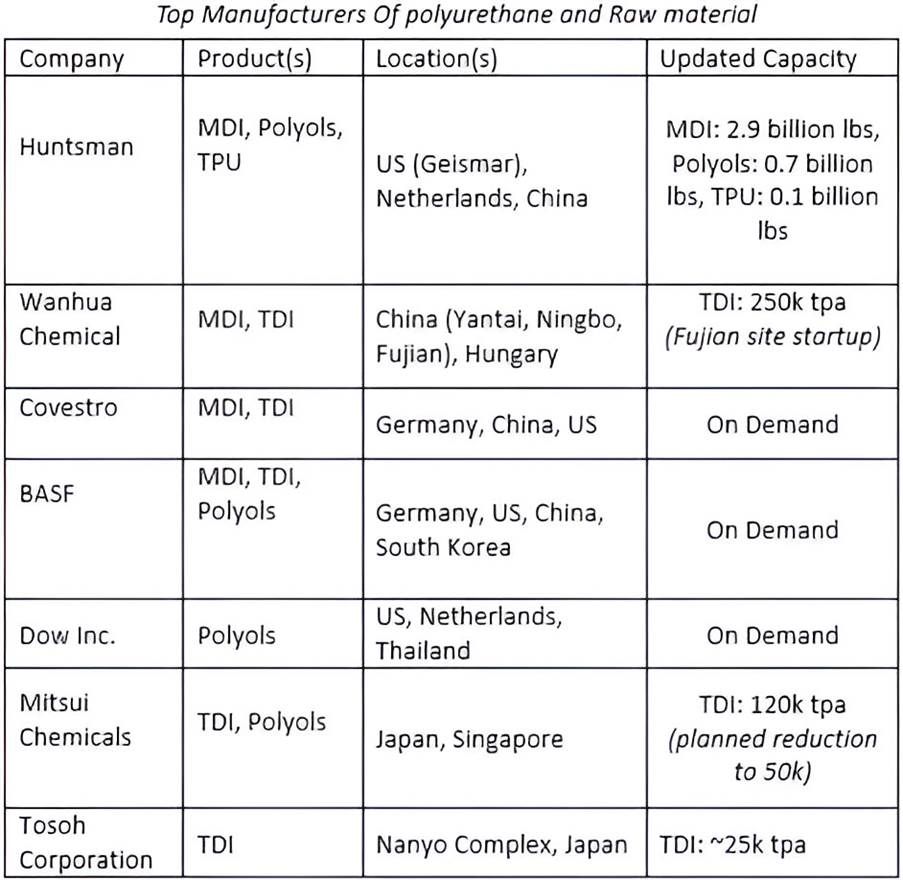
General Observations and Market Implications
- China's double dominance in both exports and imports is indicative of its role as a major global hub—both consuming and supplying polyurethane.
- There is a gradual increase in global export volumes, led mainly by Asia-Pacific countries, suggesting growing regional production capabilities.
- The declining import volumes in many regions imply slowdown in demand, potentially influenced by economic conditions or sustainability measures.
- Emerging players like Türkiye and Thailand are showing signs of contraction, needing monitoring for policy or capacity changes.
 marketing@alchempro.com