



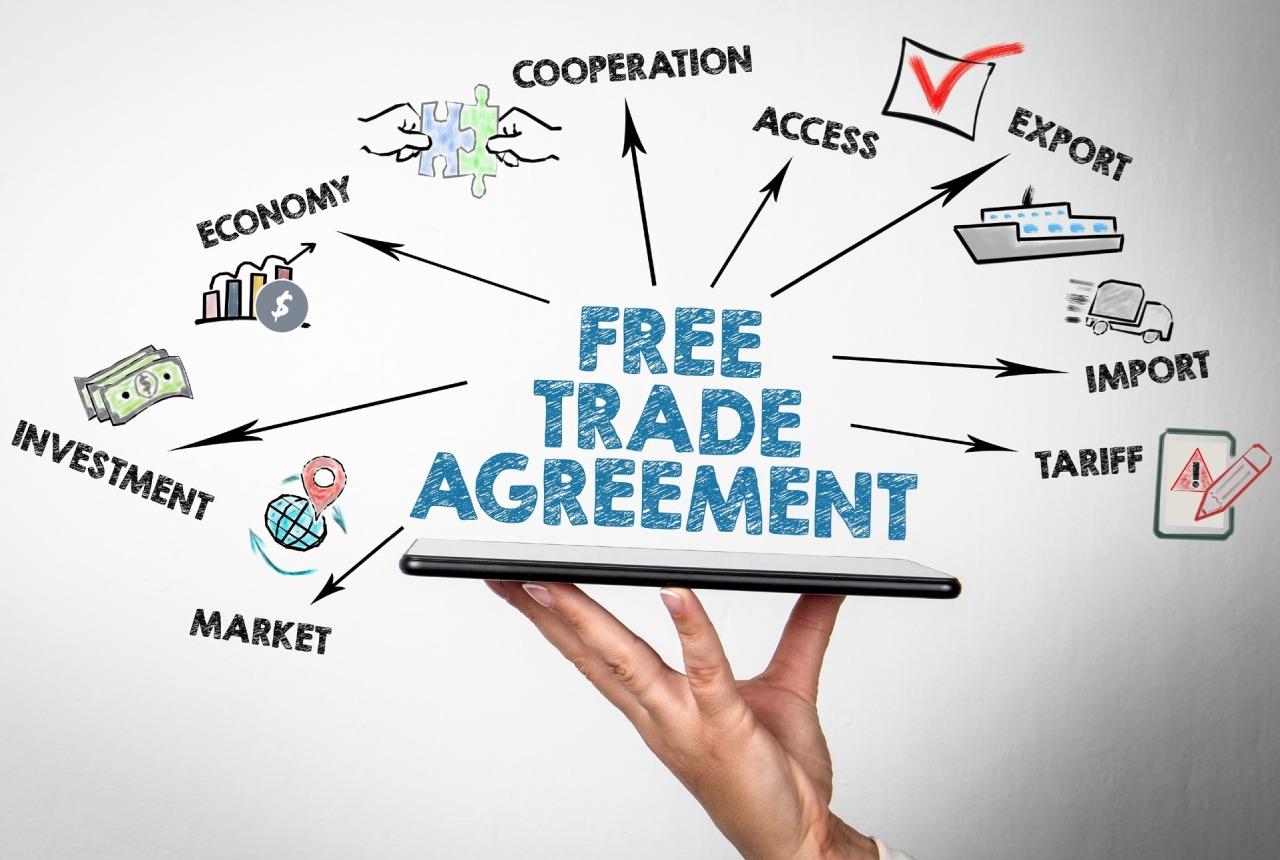
Amid geopolitical shifts and supply-chain realignments, 2025 became a defining year for new and upgraded global trade agreements. Major economies accelerated deal-making to secure market access, diversify partners, hedge against tariff volatility, and strengthen resilience. This resulted in a record number of trade agreements and upgraded trade frameworks spanning continents.
EU-US Trade Deal
One of the most significant breakthroughs was the European Union (EU) and the United States (US) trade deal signed in July 2025. The agreement sets a maximum 15 per cent tariff on most EU exports to the US, including textile and apparel, automobiles, pharmaceuticals and semiconductors, while establishing zero-for-zero tariffs on aircraft and parts, select chemicals, generic medicines, semiconductor equipment, certain agricultural products, natural resources and critical raw materials.
In return, the EU committed to purchasing $750 billion worth of US energy by 2028 and investing an additional $600 billion in strategic US sectors, with major allocations towards LNG, oil, nuclear fuel and AI-chip procurement.
The deal also includes lower EU tariffs on US industrial goods and expanded market access for US seafood and agricultural products, marking a major step forward in transatlantic economic cooperation.
The US has already implemented its side of the tariff ceiling agreement via executive action, while the EU’s reciprocal tariff reductions are still in the legislative process.
India-UK CETA
India and the United Kingdom (UK) signed a Comprehensive Economic and Trade Agreement (CETA) on July 24 in London, aiming to double bilateral trade to $120 billion by 2030. In FY 2024-25, India’s exports to the UK rose 12.6 per cent to $14.5 billion, while imports grew 2.3 per cent to $8.6 billion.
The deal lowers tariffs on India’s labour-intensive exports such as textiles, leather goods, footwear, clothing, sports equipment and organic chemicals, while cutting duties on British whisky and automobiles.
It grants 99 per cent of Indian exports duty-free access to the UK and cuts India’s average tariff on UK goods from 15 per cent to 3 per cent.
The CETA will enter into force after both the UK and Indian Parliaments have completed their respective domestic ratification procedures.
IEU-CEPA
Indonesia’s textile and apparel sector is poised to benefit from zero tariffs under the Indonesia–European Union Comprehensive Economic Partnership Agreement (IEU-CEPA) signed in September 2025, with apparel items receiving immediate duty-free access once the pact takes effect and textiles gaining strong market entry.
Overall, the pact eliminates tariffs on roughly 98–99 per cent of tariff lines and trade value, spanning 25 chapters on liberalisation, facilitation and cooperation. It is expected to save EU exporters about €600 million annually, widen market opportunities in agriculture, automotive, chemicals and machinery, and safeguard 293 geographical indications.
The deal also features robust sustainability provisions aligned with the Paris Agreement and strengthens supply-chain security for key green and digital-sector inputs, with both sides now awaiting legal review, EU Council approval and ratification.
EFTA’s Trade Agreements
During the year, the European Free Trade Association (EFTA) comprising four non-EU countries of Iceland, Liechtenstein, Norway and Switzerland was highly active in expanding its trade network through multiple new and upgraded free trade agreements (FTAs).
India-EFTA TEPA: The India-EFTA Trade and Economic Partnership Agreement (TEPA), which entered into force on October 1, 2025, marked a major milestone in deepening bilateral cooperation and enhancing market access across goods, services, investment and sustainability.
With EFTA offering concessions on 92 per cent of tariff lines, Indian exporters in machinery, organic chemicals, textiles, and processed foods will see improved market access and lower compliance costs.
India’s exports to EFTA were $72.37 million in 2024, and textiles and apparel accounted for $0.13 million, indicating significant untapped potential. Tariff-free access for leather and footwear will continue, with TEPA locking in long-term certainty for exporters.
EFTA members have committed to mobilising $100 billion in FDI over 15 years—$50 billion in the first decade and $50 billion in the next five years—excluding portfolio flows, alongside supporting the creation of one million direct jobs in India.
EFTA–MERCOSUR FTA: On September 16, EFTA and the MERCOSUR bloc comprising Argentina, Brazil, Paraguay and Uruguay signed an FTA in Rio de Janeiro, creating a free trade zone covering nearly 300 million people and over $4.3 trillion in combined GDP, with improved market access for more than 97 per cent of exports.
Both EFTA and Mercosur states are working to complete their respective domestic ratification procedures to ensure the agreement’s timely entry into force. Once implemented, the agreement will result in reduced tariffs on EFTA products entering the Mercosur market, including for textiles which previously faced tariffs of up to 35 per cent.
EFTA-Ukraine FTA: Earlier, on April 8, EFTA concluded a modernised FTA with Ukraine to broaden market access and liberalise selected product categories, building on bilateral trade of nearly €1.1 billion in 2024. Ukraine’s key exports to EFTA included woven apparel (€22 million) and furniture (€20 million).
FTAs with Kosovo, Thailand and Malaysia: On January 22, EFTA and Kosovo signed an FTA at Davos covering goods, services, trade facilitation and sustainable development to support stronger bilateral trade and a deeper partnership. During the same period, EFTA finalised a comprehensive FTA with Thailand, streamlining tariffs, trade procedures and cooperation for more resilient growth. This was followed on June 23 by an EPA with Malaysia, offering substantial tariff savings and broad commitments spanning goods, services, investment and sustainable development.
UAE’s Trade Agreements
In 2025, the UAE rapidly expanded its CEPA network, concluding major agreements with New Zealand, Azerbaijan and Malaysia to deepen trade ties and diversify economic partnerships.
NZ–UAE CEPA: The NZ–UAE CEPA, New Zealand’s fastest-concluded FTA, entered into force on August 28, 2025. It supports New Zealand’s export diversification goals through easier use of tariff preferences, clearer digital trade rules and measures addressing non-tariff barriers, along with sustainability provisions that promote gender inclusion, labour protections and climate commitments.
Azerbaijan–UAE CEPA: On July 9, Azerbaijan signed its first CEPA with the UAE, projected to boost the UAE’s GDP by $680 million and Azerbaijan’s by $300 million by 2031. The agreement covers trade in goods and services, investment, government procurement, and digital trade, while also providing tariff reductions, rules of origin, and investment protection.
UAE–Malaysia CEPA: The UAE– Malaysia CEPA was signed on January 14, 2025, and it officially entered into effect on October 1. The agreement enhances market access, simplifies customs procedures and aims to more than double bilateral trade to $13.5 billion by 2032, marking Malaysia’s first trade deal with a Gulf Cooperation Council (GCC) nation.
US Tariff Pacts with East and Southeast Asian Countries
In October 2025, the US government signed reciprocal trade agreements with Malaysia and Cambodia, and reached trade framework agreements with Thailand and Vietnam. Earlier in July, the US signed trade deals with Indonesia and the Philippines.
Indonesia: A framework for a reciprocal trade agreement was announced in July 2025, where the US reduced its planned tariff on Indonesian goods from 32 per cent to 19 per cent. In return, Indonesia agreed to eliminate nearly all tariffs on US goods and make significant purchases of US products, including Boeing aircraft, energy, and agricultural goods.
Philippines: A trade deal was announced by President Trump in July 2025, after a meeting with President Ferdinand Marcos Jr. The terms involved a 19 per cent US tariff on Philippine exports, with the Philippines offering an open market (zero tariffs) for certain US goods, such as automobiles, agricultural products, and pharmaceuticals. Philippine officials later clarified that details were still being worked out, but the 19 per cent US tariff rate was confirmed via an Executive Order in July.
Malaysia: A reciprocal trade agreement was signed on October 26, in which Malaysia committed to reducing tariffs and addressing non-tariff barriers on US exports. In exchange, the US agreed to maintain a 19 per cent reciprocal duty rate on most Malaysian imports, with exemptions for certain products.
Cambodia: The US also signed an ‘Agreement on Reciprocal Trade’ on October 26 with Cambodia. Under this agreement, Cambodia will facilitate US investment in key sectors, while the US maintains its 19 per cent reciprocal tariff on Cambodian goods, with exemptions for specific products.
Thailand: The US reached a framework for a reciprocal trade agreement with Thailand, with the aim of finalising a deal similar to those with Malaysia and Cambodia. The US committed to maintaining its 19 per cent reciprocal tariff on Thai goods.
Vietnam: The US also announced a framework for a reciprocal trade agreement with Vietnam. The US will maintain its 20 per cent reciprocal tariff on Vietnamese goods while the two countries work to finalise an agreement focused on increasing market access.
Japan and South Korea: While not a comprehensive tariff pact, President Trump also signed critical minerals cooperation agreements with Japan and secured significant investment commitments from South Korea during his October trip to Asia.
Canada–Indonesia CEPA
Canada and Indonesia signed their first bilateral CEPA on September 24, eliminating or reducing most tariff and non-tariff barriers and opening opportunities in sectors such as clean tech, agri-food, infrastructure, critical minerals, and financial services.
Once fully implemented in 2026, over 95 per cent of Canadian exports to Indonesia will face zero or lower tariffs.
Indonesia–Peru FTA
Similarly, Indonesia and Peru inked an FTA in August to boost bilateral trade and investment, expanding market access for businesses in both countries.
EU–Uzbekistan EPCA
In October, the EU and Uzbekistan concluded an Enhanced Partnership and Cooperation Agreement (EPCA) strengthening political dialogue, trade, and investment, while also completing market-access negotiations for goods and services, a key step towards Uzbekistan’s World Trade Organisation (WTO) accession.
Other Developments
The year also saw major trade momentum with several countries either upgrading FTAs, signing new MoUs, or deepening cooperation across digital trade, green transition, supply chains, and investment frameworks, signalling broader efforts to streamline market access and strengthen economic integration.
The upgraded ASEAN–Australia– New Zealand FTA (AANZFTA) took effect on April 21, streamlining documentation for tariff preferences on roughly 97.7 per cent of Australian exports.
China signed a ‘version 3.0’ upgrade of its FTA with Association of Southeast Asian Nations (ASEAN) in October, adding commitments on digital and green economy, standards, supply-chain connectivity, competition, consumer protection, and MSME
cooperation. ASEAN remains China’s largest trading partner, with bilateral trade reaching $771 billion in 2024.
In parallel, China and Australia signed a memorandum of understanding (MoU) in July this year to strengthen and update their FTA through a comprehensive joint review, enhancing trade and investment liberalisation. Vietnam and Australia also signed an MoU in November to improve FTA utilisation through a new ecosystem model connecting producers, exporters, logistics providers, industry associations, financiers, and government agencies to maximise benefits, diversify export markets, attract investment, boost productivity, and support Vietnam’s green transition.
Negotiations continued alongside these signings. The eighth round of UK–Switzerland enhanced FTA talks in October concluded on competition issues, ensuring fair market access, with the ninth round scheduled for early 2026.
The EU and India aim to finalise their FTA by 2025-end and advance an Investment Protection Agreement while upgrading the Macroeconomic Dialogue. The European Council also endorsed a new strategic EU–India agenda across five pillars—prosperity and sustainability, technology and innovation, security and defence, connectivity and global issues, and cross-cutting enablers—alongside proposals to establish an EU–India Business Forum to inform policymaking.
 marketing@alchempro.com