


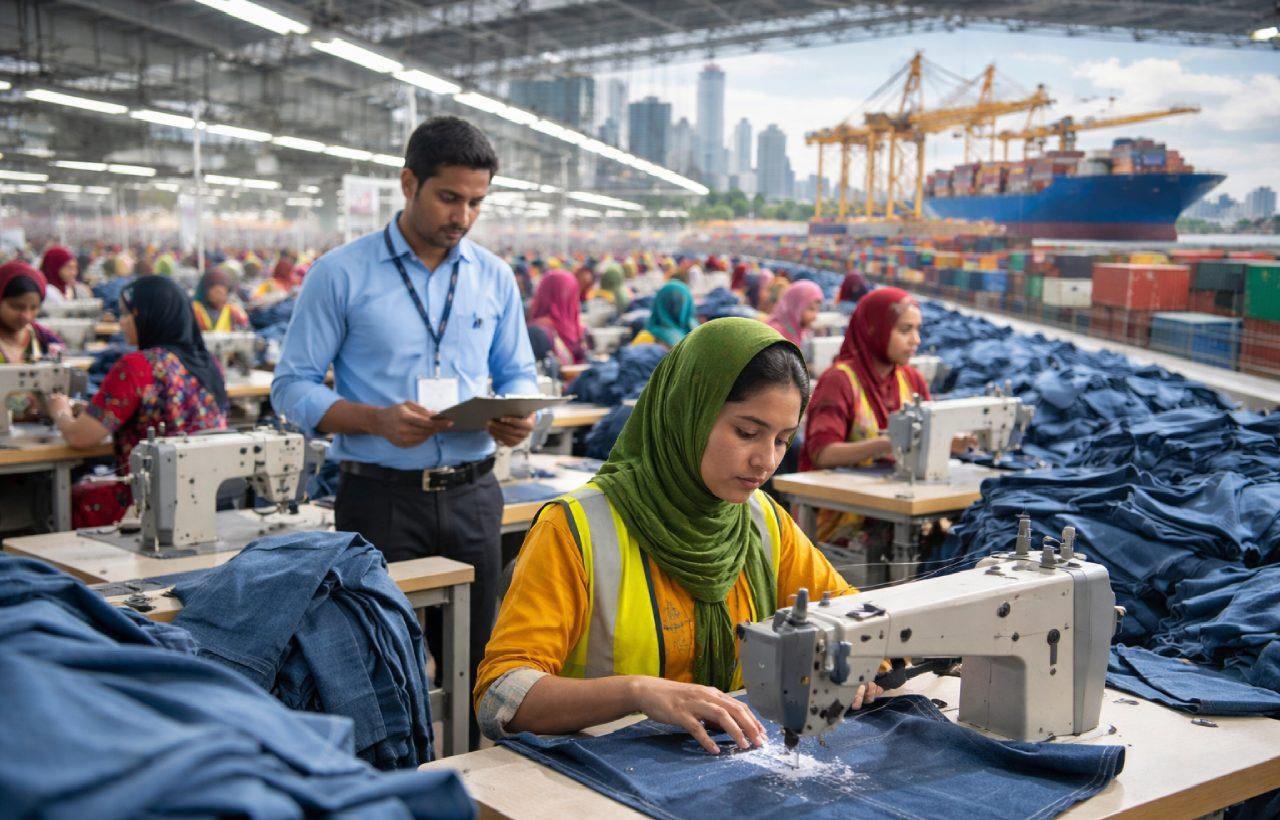
The global textile and clothing industry is undergoing a significant structural shift. For decades, China has been the world’s largest apparel producer, supported by its vast manufacturing base, integrated supply chains, and advanced technologies.
In recent years, however, rising production costs, evolving trade dynamics, and geopolitical uncertainty have compelled international companies to rethink their sourcing strategies. As a result, countries such as Bangladesh and Vietnam are gaining prominence in the evolving global textile landscape.
From Cost Advantage to Strategic Shift: Bangladesh’s Rising Role
Bangladesh has emerged as a major clothing exporter, driven by its low labour costs, extensive manufacturing capacity, and preferential access to key markets, particularly in Europe. Over the past decade, the country has also strengthened its position as a reliable sourcing destination, supported by stricter compliance standards and improved worker safety in manufacturing. As brands diversify away from concentrated production hubs, these gains have enabled Bangladesh to capture a growing share of global apparel orders.
However, the redistribution of global textile orders is neither linear nor without risk. Heightened scrutiny of supply chains, particularly in certain industrial regions, has prompted buyers to adopt more diversified sourcing strategies, shifting parts of production and logistics across multiple countries. This rise of indirect and multi-country supply chains is increasing demand across several Asian manufacturing hubs. While such shifts may create new opportunities, they are also intensifying regional competition and could lead to fluctuations in order volumes for established exporters like Bangladesh.
Vietnam’s rapid advancement underscores the need to integrate technology into global sourcing strategies. The country has invested heavily in advanced textiles, automation, and digital production techniques. These investments have transformed Vietnam into a modern manufacturing hub, effectively balancing efficiency with sustainability.
At the same time, India is working to strengthen its global position, leveraging its abundant raw materials and supportive policies for technical textiles. These developments reflect a broader shift in the textile sector, moving from a singular focus on cost reduction towards a model centred on value-added, technology-driven production.
Balancing Growth Pressures with Future-Ready Transformation
In the coming years, however, Bangladesh’s long-standing advantage, built on affordable labour, may come under pressure. Rising living costs and greater recognition of workers’ rights are likely to influence future wage negotiations. While improvements in pay and working conditions are essential for social stability, abrupt increases without corresponding productivity gains could strain already vulnerable businesses. Balancing economic competitiveness with equitable progress is therefore becoming increasingly critical.
The global textile trade is shaped not only by internal dynamics but also by external pressures. Fluctuations in energy costs, disruptions to key shipping routes, and new environmental regulations in major consumer markets are reshaping production and distribution patterns.
These uncertainties heighten the need for export-dependent nations to build resilience through market diversification, stronger industrial capabilities, and closer collaboration between policymakers, industry leaders, and research institutions.
Today, Bangladesh’s textile industry stands at a critical juncture. The sector must reduce its reliance on labour-intensive models and transition towards modern machinery, automation, and workforce upskilling to remain competitive in global supply chains. By investing in technical textiles, sustainable manufacturing practices, and innovation-led production, the country can move up the value chain and become less vulnerable to cost fluctuations.
The global textile industry is undergoing a clear transformation. Bangladesh has so far prospered due to its scale and competitive edge, but its future growth will depend on how effectively it adapts to evolving technologies, regulations, and global dynamics. With decisive policy action and strategic investment, the country can sustain its position as a leading apparel exporter while building a more resilient and diversified textile sector.

 marketing@alchempro.com