




Phthalic Anhydride is a solid, aromatic compound typically produced by oxidising ortho-xylene. Known for its versatility, it acts as a foundational material in the creation of plasticisers, which are added to plastics to improve flexibility. It is also essential in manufacturing certain types of synthetic resins and colorants. Thanks to its broad utility, Phthalic Anhydride plays a central role in various sectors, including construction materials, consumer goods, automotive components, and industrial coatings.
Price Trend Analysis: Prices Rose Significantly
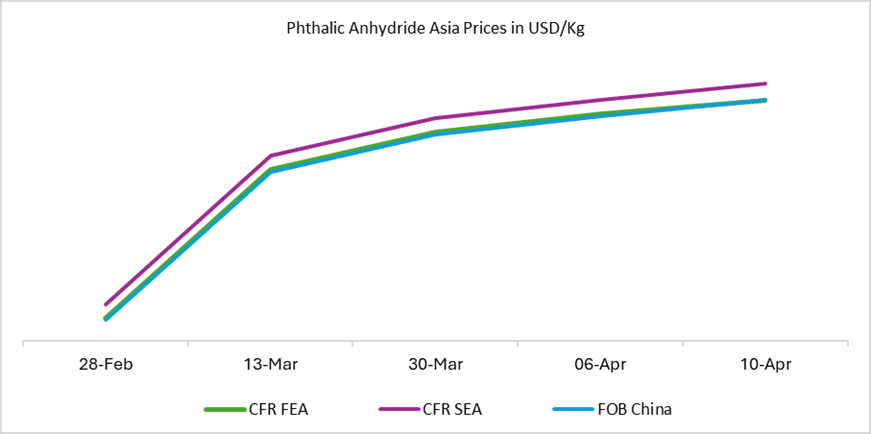
The sharpest increase occurred between late February and mid-March, followed by gradual stabilisation in April.
Trigger Phase (Late February)
US–Israel strikes on Iran led to the closure of the Strait of Hormuz, triggering panic buying and supply disruptions.
Escalation Phase (March)
Prices surged by Approx 53 per cent due to freight disruption, insurance surcharges, and feedstock shortages. The bullwhip effect amplified supply chain stress.
Stabilisation Phase (April)
Prices continued rising but at a slower pace. The market showed signs of controlled tightness with high volatility risk.
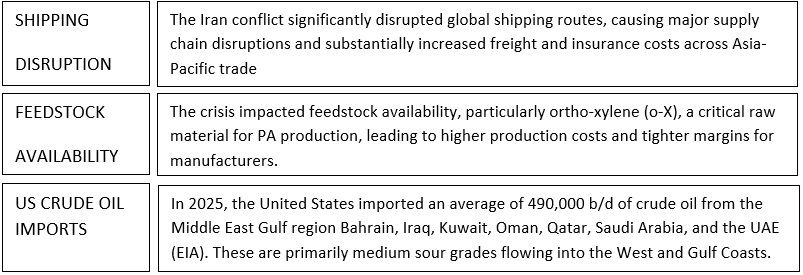
Supply was constrained due to export bottlenecks and logistical challenges. Demand showed moderate recovery driven by construction, coatings, and plasticisers. Despite a 60 per cent increase in prices, demand remained stable, indicating low short-term substitution elasticity. Manufactures are not running plants at full capacity either of upstream or downstream.
China remained the dominant exporter and global price setter. Southeast Asia experienced the highest prices due to strong demand and import dependency, while Far East Asia closely followed China pricing trends. Price spreads remained stable (~$0.02–0.04/kg), indicating efficient arbitrage and balanced trade flows.
- Plasticisers: Strong rebound
- Construction: Moderate recovery
- Coatings: Seasonal support
- Composites: Stable
Bullish Risks
- Continued disruption in the Strait of Hormuz
- Escalation in US–Iran tensions
- Volatility in energy markets
Bearish Risks
- Demand destruction at elevated prices
- Trade normalisation if geopolitical tensions ease
- Easing tensions / ceasefire → trade normalisation vie route
 marketing@alchempro.com