



The global textile market was valued at around $1.33 trillion in 2024 and is anticipated to reach approximately $2.01 trillion by 2034, growing at a CAGR of 4.24 per cent. There is a growing demand for textiles because of fast fashion, rising disposable incomes in the emerging economies, and rapid urbanisation. In this scenario, trendy, affordable, and comfortable clothing is being preferred by consumers, fuelling greater demand for retail garments. In 2024-25, India emerged as the world’s sixth-largest textile exporter, contributing 8.63 per cent to national exports and 4.1 per cent to global trade.
Advantages of a Skilled Workforce
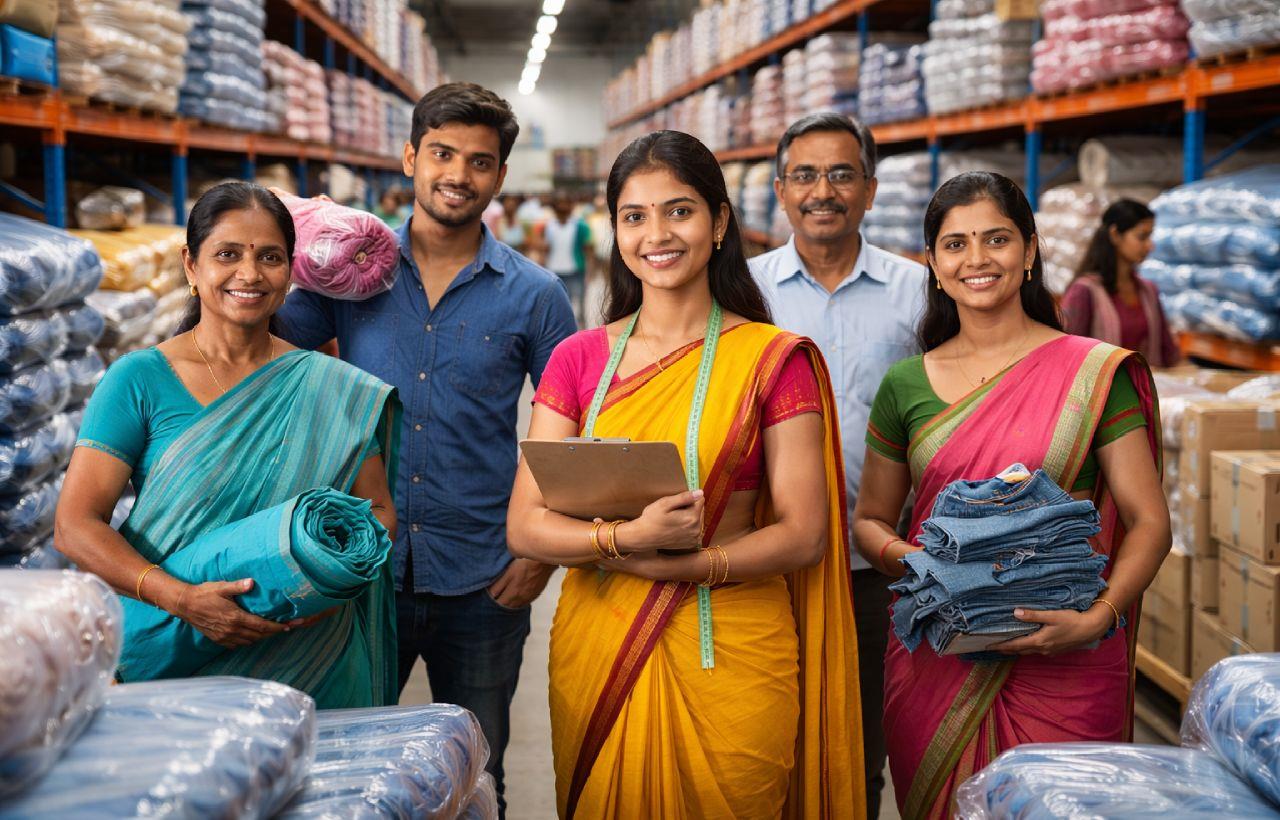
In this landscape, the conventional advantages of cost and scale are no longer enough to maintain market share. Herein, India’s deep talent pool of skilled and experienced workers throughout the textile value chain of spinning, weaving, processing, and garmenting is acting as an indispensable differentiator, driving the country’s leadership in textile exports.
With a population of more than 1.4 billion, India is well-placed to leverage its demographic dividend to drive textile exports. Right from spinning to stitching, the domestic textile manufacturing segment is renowned for the intensity of its skills. Most of this can be credited to the Central Government’s skill development schemes. For example, the Indian Ministry of Textiles has been implementing Samarth (Scheme for Capacity Building in Textiles Sector). This pan-India programme offers demand-driven, placement-oriented skilling modules, supplementing the industry’s efforts to generate employment in the organised textile sector as well as related segments. Samarth covers the entire value chain of textiles, barring spinning and weaving within the organised market.1
Boosting the Skill Spectrum with Industry-led Programmes
Unlike the low-cost apparel focus of Bangladesh or the process efficiencies of Vietnam, the skill spectrum in India facilitates mass production plus high-value textile exports. Additionally, regional segmentation has enabled textile clusters to specialise in cotton spinning (e.g., Maharashtra and Gujarat), man-made fibres (Surat), weaving (Punjab and Tamil Nadu), and processing (Haryana and Rajasthan).
In adapting to universal fashion trends, the role of specialised design teams and trained workers is critical. Besides driving product innovation, upskilled workers can seamlessly shift from basic production to value-added services such as embroidery, sustainable textiles etc. Skilled workers are essential as such services usually require high levels of skills. It is here that government- and industry-led programmes like Samarth, MoRD’s DDU-GKY (Deen Dayal Upadhyaya Grameen Kaushalya Yojana), NTTM (National Technical Textiles Mission), and PM-MITRA (Mega Integrated Textile Region and Apparel) have played a significant role, with about 5.41 lakh individuals trained, of which over 4.05 lakh beneficiaries having already secured employment.
Sustainability, Innovation, and Inclusive Skills Development: A Market Differentiator
Innovation and sustainability are gaining significance by the day in the textile industry. As a result, a skilled workforce is critical to spur incremental process innovations across the complete textile chain. This includes yarn blending and fabric construction right up to eco-conscious dyeing and finishing technologies, which are all crucial for the sustained growth of textile exports.
Fortunately, the ongoing industry-wide training schemes, supported by both the government and private players, ensure sustained skill upgradation in the emerging sustainable textile technologies. Here, India’s ability to leverage its people’s power needs special mention, especially in terms of rural and female participation. It is worth noting that 88 per cent of trainees under government skilling schemes such as Samarth are women.2 The inclusive training programmes are a significant differentiator in the case of competitors such as Vietnam and China.
One must emphasise that the domestic textile supply chains in India have proven their resilience in recent years. This includes black swan events like the pandemic in 2020 and recent geopolitical challenges such as the Russia-Ukraine war. Despite disruptions, the domestic textile workforce has been instrumental in ensuring continuity while re-adapting their processes and speedily implementing new protocols. Unlike many regions with rigid, single-product mills, India’s skilled workforce has adapted swiftly across product segments. Such trained human resources have been crucial in embedding digitisation on production work floors. It is this people-propelled flexibility and resilience that provides India a unique skills and demographic advantage over other textile-exporting nations.
Trained Workers and Brand Partnerships to Drive Export Competitiveness
There has been much talk about automation and technological tools. However, even the best of technologies in the textile industry requires skilled human resources to use and monitor them. This is particularly true in the case of export-oriented units where quality, precision and compliance with global benchmarks take precedence. Therefore, automation by itself cannot future-proof textile exports unless backed by the expert supervision of trained textile workers.
Accordingly, it is imperative to make adequate investments in the training, health and well-being of textile workers to help curb attrition levels and boost productivity. Yet, upskilling alone would not guarantee better margins or higher returns. Sustained export competitiveness calls for combined efforts through robust brand-supplier partnerships and transparent value-sharing mechanisms.
Clarion Call to Invest in Human Capital – India’s Trump Card!
Traditionally, India’s workforce has been prized for providing value-for-money services. Today, the stress is on treating the workforce as a strategic asset rather than a mere cost centre. Given that the government has maintained a consistent focus on upskilling and reskilling the workforce, it is clear why Indian workers are much sought after in diverse domains across the globe.
Annual investments in upskilling and retraining workers are paying rich dividends via higher productivity. The clarion call to textile manufacturers remains clear: invest in skilling people today to emerge as leaders in the ongoing workforce-led textile exports transformation.
 marketing@alchempro.com