



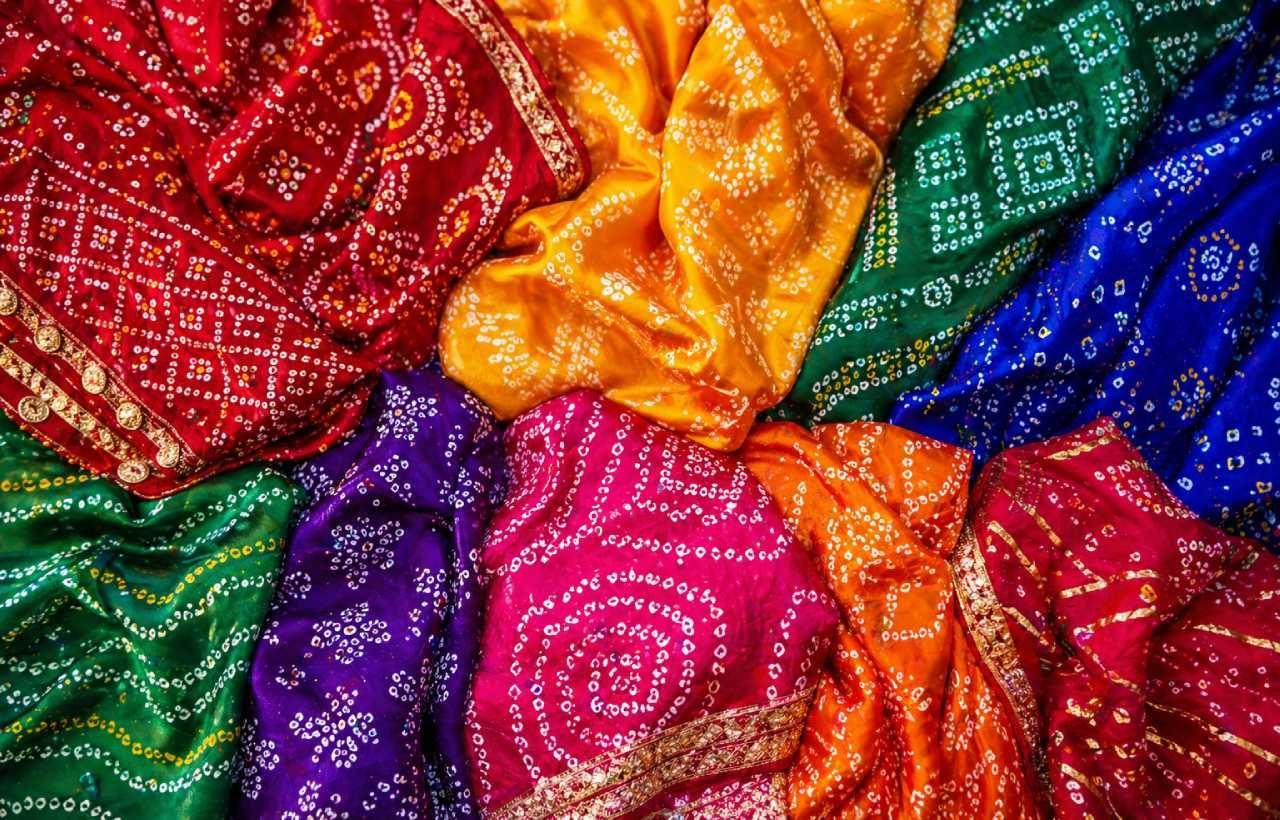
In the vibrant textile landscape of India, few crafts are as visually captivating and culturally rich as Bandhani. Characterised by its intricate patterns of tiny dots, flowing waves, and symbolic motifs, Bandhani is more than just a fabric; it is a story of heritage, devotion, and artistry passed down through generations. Rooted deeply in the regions of Gujarat and Rajasthan, this ancient tie-dye technique continues to enchant fashion lovers across the world.
What makes Bandhani truly special is the human touch behind every piece, where skilled artisans spend hours hand-tying thousands of tiny knots to create detailed designs. Each creation carries a sense of individuality, as no two patterns are ever exactly alike. Beyond its visual appeal, Bandhani holds emotional and cultural value, often marking important life moments and celebrations. Today, it stands at the intersection of tradition and modern fashion, proving that timeless craftsmanship never goes out of style.
The word ‘Bandhani’ is derived from the Sanskrit term ‘bandh’, meaning ‘to tie’. True to its name, Bandhani involves tying small portions of fabric tightly with thread before dyeing it. These tied sections resist the dye, forming delicate patterns once the threads are removed. The result is a mesmerising interplay of dots and colours, making each piece uniquely handcrafted.
Bandhani is also known as ‘Bandhej’, especially in Rajasthan, and is one of the oldest known textile art forms in India, with references dating back over 5,000 years. According to Volza’s Bandhani import data1, as of early 2026, the United States, Malaysia, and Australia rank among the top importing countries. Meanwhile, India, Singapore, and Kenya are recognised as some of the leading exporters of Bandhani products.
This technique is celebrated for its precision, as even the smallest variation in tying can alter the final design. Traditionally practiced on fabrics like cotton and silk, Bandhani showcases a remarkable blend of simplicity and complexity in its execution. Its enduring appeal lies in the harmony of craft, culture, and creativity that defines every piece.
What further elevates Bandhani is the time-intensive process, where artisans often work for days to complete a single garment. The patterns are not merely decorative but are often guided by tradition, with specific designs associated with regions, communities, and occasions. Despite evolving trends, the essence of Bandhani remains rooted in its handmade authenticity. This balance of heritage and adaptability is what continues to keep the craft relevant in contemporary fashion.
Bandhani’s origins can be traced to the ancient Indus Valley Civilisation. Archaeological evidence suggests that early forms of tie-dye existed in regions like Mohenjo-daro. Over time, the craft flourished under royal patronage, especially during the medieval period, when it became synonymous with royalty and ceremonial attire.
In Gujarat, communities like the Khatris have preserved and refined this craft for centuries. Similarly, in Rajasthan, Bandhani became an integral part of traditional attire, especially for weddings and festivals.
Historical records and oral traditions suggest that Bandhani textiles were often exchanged as prized gifts, symbolising prosperity and respect. The craft also evolved through trade routes, where regional influences introduced new motifs, colours, and dyeing methods. As generations passed, families of artisans safeguarded their techniques, ensuring that the knowledge remained alive within communities. Today, Bandhani stands as a living reminder of India’s enduring textile heritage and artistic legacy.
Creating Bandhani is a labour-intensive and highly skilled process. It involves several meticulous steps:
-
Design Marking: The fabric, usually cotton, silk, or georgette, is first marked with a pattern using washable ink. These guidelines help artisans maintain symmetry and accuracy while tying the fabric. Depending on the complexity of the design, the marking stage may take considerable time and careful planning.
-
Tying (Bandhan): Artisans pinch tiny portions of the fabric and tie them tightly with thread. A single saree can have thousands of such knots, each tied by hand. The tightness of every knot is crucial, as it determines how effectively the dye is resisted. This stage demands immense patience, dexterity, and years of practice to master intricate patterns.
-
Dyeing: The tied fabric is then dipped into natural or synthetic dyes. Multiple dyeing stages may be used to achieve layered colours. Lighter shades are usually applied first, followed by darker tones for depth and contrast. After each dye bath, sections may be retied or untied to create multi-coloured effects and more elaborate designs.
- Drying and Untying: Once dried, the threads are carefully removed to reveal the final pattern: an intricate constellation of dots and motifs. This unveiling is often the most exciting stage, as the hidden design gradually emerges. The fabric is then lightly stretched or finished to enhance its texture and drape. Every completed piece reflects the artisan’s precision, creativity, and dedication.
Symbolism and Cultural Significance
Bandhani is not just decorative; it carries deep cultural and spiritual meaning. Different colours and patterns symbolise various emotions and life events:
- Red: Marriage, fertility, and auspicious beginnings
- Yellow: Joy and spirituality
- Green: Prosperity and harmony
- Blue: Strength and divine energy
In many traditions, the choice of colour is carefully considered, as it is believed to reflect mood, intention, and occasion. Brides in several regions traditionally wear red or maroon Bandhani as a symbol of love and prosperity, while yellow is often chosen for festive and religious ceremonies.
Motifs like leheriya (waves), chandrakala (moon shapes), and shikari (figurative designs) often reflect nature, mythology, and daily life. These designs are not merely ornamental but frequently carry symbolic messages of growth, continuity, protection, and abundance. Regional patterns also help identify local heritage and artisan communities, adding another layer of meaning to the fabric.
In many Indian communities, Bandhani garments are considered sacred and are worn during rituals, weddings, and festivals like Navratri and Diwali. They are often gifted during special occasions as tokens of goodwill, blessings, and family tradition. Even today, Bandhani remains a cherished expression of identity, devotion, and timeless cultural pride.
Though the core technique remains the same, Bandhani styles vary across regions:
-
Gujarati Bandhani: Known for its fine dots and elaborate patterns, especially from cities like Jamnagar and Bhuj, these often feature vibrant reds, maroons, and blacks. Gujarati Bandhani is admired for its precision and dense detailing, with motifs such as flowers, grids, and circular forms commonly seen. Fabrics from this region are widely used for sarees, dupattas, and festive garments, often reflecting a refined and intricate aesthetic. The craftsmanship here is deeply rooted in artisan communities that have preserved the tradition for generations.
- Rajasthani Bandhej: Famous for bold colours and wave-like patterns (leheriya), particularly from Jaipur and Udaipur, Rajasthani Bandhej often embraces bright shades such as yellow, orange, pink, and green, mirroring the vibrancy of the desert landscape and local celebrations. The flowing leheriya pattern is especially popular during monsoon festivals and festive occasions. Turbans, odhnis, and sarees featuring Bandhej are an important part of traditional attire in the state. The style is celebrated for its lively energy and striking visual appeal.
Each region brings its own aesthetic, making Bandhani a diverse and evolving art form. These regional identities add richness to the craft while showcasing how a single technique can adapt to different cultural expressions. Together, Gujarat and Rajasthan have helped Bandhani gain recognition as one of India’s most treasured textile traditions.
What was once traditional attire has now found its place on global runways. Contemporary designers are reimagining Bandhani in:
- Indo-western outfits
- Fusion wear
- Scarves, dupattas, and dresses
- Even accessories like bags and footwear
The appeal lies in its authenticity; each piece is handcrafted, making it inherently sustainable and unique in an era of fast fashion.
The Human Touch: Artisans Behind the Craft
At the heart of Bandhani are the artisans, often women, who dedicate hours, sometimes days, to create a single piece. The tying process requires immense patience, precision, and experience. Many artisans learn the craft from childhood, inheriting techniques and design knowledge passed down through generations. Their skilled hands can create thousands of tiny knots with remarkable speed and accuracy, transforming plain fabric into wearable art.
Skilled artisans can tie as many as 2,000 dots in a day, while part-time workers, many of whom are women, usually complete around 400 to 500 dots daily.2 A single stole may contain nearly 4,000 to 5,000 tiny knots, showing the detailed effort involved in the craft. Premium Bandhani sarees can feature up to 700 knots within just one square inch of fabric. Because of this intricate handwork, a fine-quality Bandhani saree may take as long as two months for one artisan to finish.
Despite its beauty and demand, many artisans face challenges such as low wages and competition from machine-made imitations. Limited market access and the rise of mass-produced alternatives often make it difficult for traditional craftspeople to receive fair recognition for their labour. Seasonal demand can also create financial uncertainty for families who rely on this craft as their primary livelihood.
Supporting authentic Bandhani means preserving not just a craft, but a way of life. Choosing handmade pieces helps sustain artisan communities, encourage fair wages, and keep centuries-old traditions alive. It also honours the human creativity and dedication that no machine can truly replicate.
How to Identify Authentic Bandhani
With rising popularity, it is important to distinguish genuine Bandhani from printed replicas. Handcrafted Bandhani carries subtle details and textures that machine-printed versions often fail to replicate. Since each piece is individually tied and dyed, slight variations are natural and add to its uniqueness.
-
Look for tiny irregularities: It is a sign of handwork. Perfectly uniform dots and overly symmetrical patterns may indicate machine printing rather than manual craftsmanship.
-
Check the reverse side for thread marks: An authentic Bandhani often shows traces of tying or slight impressions on the back of the fabric, revealing the resist-dye process.
-
Feel the texture: An authentic Bandhani has a slightly raised surface where knots were tied. The fabric may also feel softer and more natural compared to stiff, printed imitations.
- Examine the colour depth: A hand-dyed Bandhani usually has rich, layered tones with subtle variations, whereas printed versions can often appear flat or overly consistent.
Bandhani is more than a textile; it is a living tradition that weaves together art, culture, and spirituality. Each dot tells a story, each colour carries emotion, and each piece reflects the devotion of its maker.
In a world increasingly driven by mass production, Bandhani stands as a testament to the enduring charm of handcrafted beauty. Whether worn as a saree, dupatta, or modern silhouette, it continues to connect the past with the present. Its ability to evolve with changing fashion trends while preserving its traditional essence is what makes it truly remarkable.
Designers and artisans alike continue to reinterpret Bandhani for new generations, ensuring its relevance in contemporary wardrobes. As long as craftsmanship is cherished, Bandhani will remain a vibrant thread in the story of Indian textiles.
 marketing@alchempro.com