



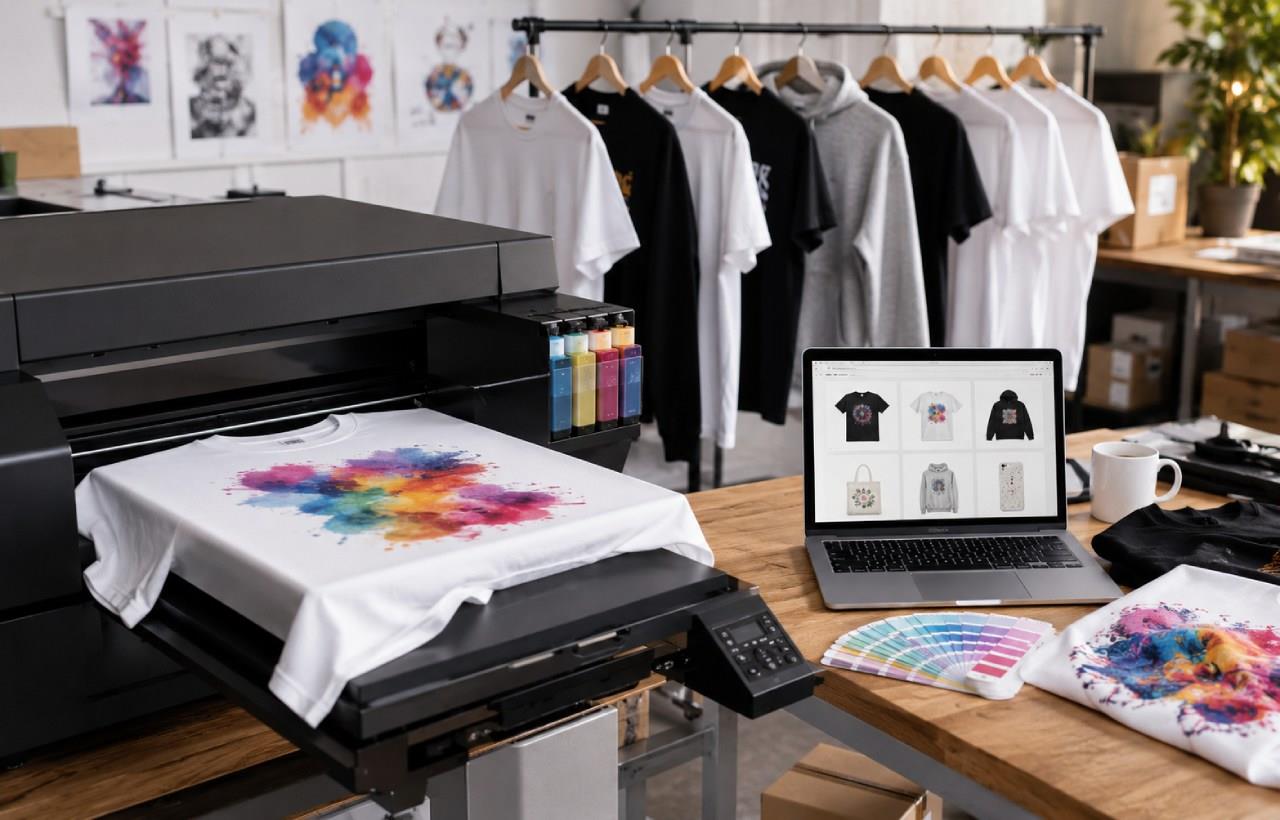
The textile printing industry is undergoing a quiet yet significant transformation that is reshaping its traditional foundations. For decades, the sector operated on a scale-driven model where success depended on large production volumes. Businesses invested heavily in machinery, raw materials, and labour, relying on advance demand forecasting to plan production cycles. This often resulted in substantial inventory, tying up capital and creating risks associated with unsold stock.
Such a system largely favoured established players with strong financial resources and well-developed distribution networks. These companies were better equipped to manage the uncertainties of demand fluctuations and the operational complexities of large-scale production. At the same time, high entry barriers made it difficult for smaller entrepreneurs and independent designers to participate in the market.
In recent years, this traditional structure has begun to evolve. Advances in digital printing technologies have enabled efficient, high-quality production in smaller quantities, while the growth of e-commerce has created more direct pathways between businesses and consumers. Together, these developments have introduced new possibilities for how textile products are designed, produced, and sold.
Within this changing landscape, print-on-demand has emerged as a model that challenges long-standing practices. Instead of producing goods in bulk based on projected demand, businesses can now create products only after a confirmed order is placed. This marks a shift towards a more responsive and flexible approach, encouraging companies across the industry to rethink how they operate and compete.
Understanding Print-on-Demand in Textiles
Print-on-demand (POD) is a production and fulfilment method where textile products are printed only after a confirmed order is received. Unlike traditional methods such as screen printing, which require setup costs and are most efficient in large volumes, POD relies on digital printing technologies that can economically produce even a single item.
The process is relatively straightforward. A business creates designs and lists them on an online platform. When a customer places an order, the design is sent to a production partner who prints it on the chosen textile product and ships it directly to the customer. The business itself may never handle the physical product.
This model removes the need for warehousing and significantly reduces upfront investment. It also allows businesses to offer a wide range of designs without worrying about unsold inventory. As a result, the focus shifts from managing production logistics to building strong design identities and customer relationships.
Shift from Inventory-Driven to Demand-Driven Models
Traditional textile printing has always depended heavily on forecasting. Businesses had to predict trends, estimate demand, and produce goods months in advance. This often led to overproduction, excess stock, and heavy discounting to clear unsold inventory.
POD introduces a fundamentally different approach. Production begins only after a sale is made. This demand-driven model reduces uncertainty and financial risk. Companies no longer need to commit large sums of capital to inventory that may or may not sell.
This shift also allows businesses to respond quickly to changing trends. Instead of waiting for the next production cycle, new designs can be launched instantly. If a design performs well, it can continue to be offered. If it does not, it can be removed without any financial loss tied to unsold goods.
Democratisation of Textile Entrepreneurship
One of the most significant impacts of POD is how it has opened the textile industry to a wider range of participants. In the past, starting a textile brand required access to manufacturing facilities, supply chains, and significant capital. These barriers made it difficult for individuals and small teams to enter the market.
With POD, those barriers are much lower. Designers, artists, and entrepreneurs can launch their own brands with minimal investment. They can test ideas, build niche audiences, and scale gradually without the pressure of large upfront costs.
This democratisation has led to a surge in independent brands and creative experimentation. Markets are now filled with highly specialised products that cater to specific communities, interests, and cultural expressions. While competition has increased, so has diversity and innovation within the industry.
Rise of Asset-Light Business Models
Print-on-demand has encouraged a shift towards asset-light business structures. Traditional textile companies often invest heavily in machinery, production units, and inventory. These fixed assets can limit flexibility and increase operational risk.
In contrast, POD businesses operate with minimal physical infrastructure. Production, printing, and logistics are typically handled by third-party providers. This allows companies to focus on areas such as design, branding, and customer acquisition.
Such a model enables faster scaling. A business can grow its product offerings and reach without needing to expand physical operations at the same pace. It also makes it easier to adapt to market changes, since there are fewer fixed commitments.
Mass Customisation and Personalisation
Modern consumers increasingly value products that reflect their identity and preferences. Print-on-demand makes it possible to deliver this level of personalisation at scale.
Businesses can offer a wide variety of designs, colour options, and even personalised elements such as names or custom graphics. Each product can be unique, yet produced efficiently through digital printing.
This capability has transformed textiles from standardised goods into personalised experiences. It allows brands to connect more deeply with customers and build loyalty through tailored offerings. It also supports niche markets that may not have been viable under traditional mass production models.
Print-on-demand is reshaping textile supply chains by making them shorter and more flexible. Traditional supply chains often involve multiple stages, including bulk manufacturing in distant locations, shipping to warehouses, and distribution to retailers.
In the POD model, production is closely tied to the point of sale. Many providers operate regionally or locally, which reduces transportation distances and delivery times. Orders move directly from production to the customer, bypassing several intermediate steps.
This streamlined approach improves efficiency and reduces the complexity of logistics. It also allows businesses to operate globally without maintaining physical presence in multiple regions, as production partners can handle fulfilment in different markets.
Sustainability and Waste Reduction
Sustainability has become a critical concern in the textile industry, which has long been associated with overproduction and waste. Print-on-demand offers a more responsible alternative by aligning production with actual demand.
Since products are created only when ordered, there is little to no unsold inventory. This reduces waste significantly and minimises the environmental impact associated with excess production.
In addition, shorter supply chains and localised production can lower transportation emissions. While POD is not entirely free from environmental challenges, it represents a meaningful step towards more sustainable practices in textile manufacturing.
Changing Revenue and Cost Structures
The financial dynamics of textile businesses also change under the print-on-demand model. Traditional operations often involve high upfront costs but lower per-unit production costs when scaled.
In contrast, POD businesses benefit from low initial investment but face higher per-unit costs. This means profitability depends less on volume and more on factors such as brand strength, design appeal, and marketing effectiveness.
Pricing strategies often reflect this shift. Many POD products are positioned as premium or personalised items, allowing businesses to maintain healthy margins despite higher production costs. Revenue growth is driven by customer engagement and repeat purchases rather than sheer production scale.
Despite its advantages, print-on-demand is not without challenges. One of the primary concerns is margin pressure. Higher per-unit costs can limit profitability, especially in highly competitive markets.
Quality control can also be an issue, as production is often outsourced to third-party providers. Variations in print quality, material standards, and delivery timelines can affect customer satisfaction.
Another limitation is scalability for high-volume demand. While POD is ideal for small to medium quantities and customised products, it may not be as efficient as traditional methods for large-scale production.
Dependence on external partners adds another layer of risk. Businesses must rely on the reliability and performance of their production and logistics providers, which can sometimes be outside their direct control.
 marketing@alchempro.com