



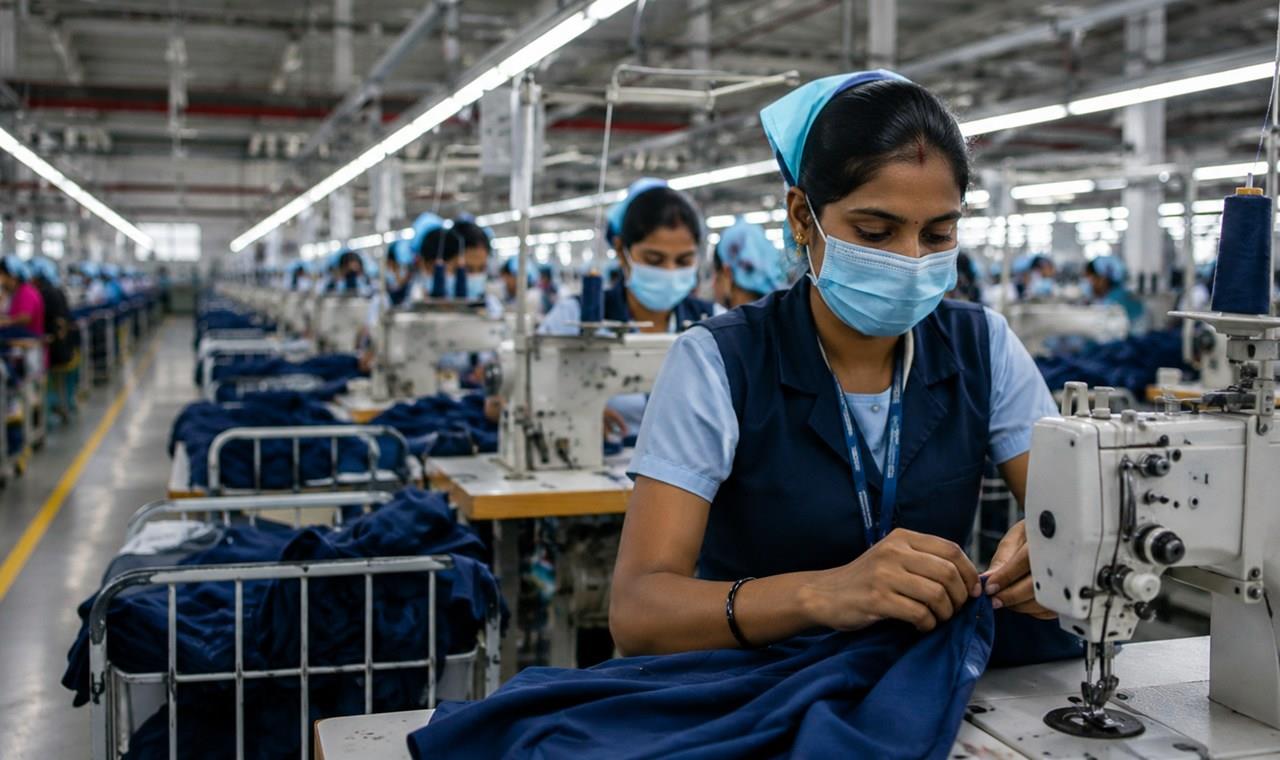
If you visit the knitwear manufacturing capital of India, Tiruppur, or the synthetic textile hub of Surat, you will find a significant percentage of the workforce hailing from the eastern state of Odisha. For decades, the state supplied labour to India’s textile heartlands. But now, the state is positioning itself as the country’s next major textile and apparel manufacturing destination (Odisha Tex, 2025). With over ₹20,000 crore in proposed investments and more than 60 manufacturing units cleared, a silent revolution is underway. A few major companies including Aditya Birla Lifestyle Brands Ltd (ABLBL), Shahi Exports, Epic Group, SAPL and Jockey have already started operations, and another 25 are about to start.
The Government of Odisha is setting up six new industrial parks for the fashion industry across the state, targeting the textile, apparel and footwear sectors. These parks are coming up in Balangir, Jagatsinghpur, Keonjhar, Ganjam, Sambalpur and Cuttack. These are expected to boost manufacturing and create thousands of jobs, particularly in semi-urban and rural areas. With companies like MAS Holdings, Page Industries, Colortone Textiles and Hindalco entering the ecosystem, the state is targeting to create one lakh jobs by 2030. The Odisha government’s earlier visionary textile policy and the present government’s successful implementation of it are clearly reflected in the state’s progress in the textile industry today. In this context, how Odisha became a compelling destination for apparel manufacturing and how it can position itself as future-ready in terms of skills, sustainability and smart technologies are important questions for any fashion industry enthusiast. To answer these, we (the authors) did a focus group interview with Amit Kumar Singh (VP, Epic Group), Dharmendra Kumar (GM Operations, SAPL), Rahul Jindal (GM & Cluster Head, ABLBL) and Surya Narayan Patnaik (Additional Director - Sericulture, Government of Odisha). Their insights unfold a new success story of Odisha.
A Compelling Destination for Apparel Manufacturing
All corporate leaders agreed on one key advantage. Odisha offers more educated and trainable youth from local communities. Unlike Bengaluru or Tiruppur, factories here do not face the logistical and financial challenges of bringing workers from fifty to sixty kilometres away. In addition, several operational factors make Odisha attractive. The operational cost of an Odisha factory is often lower than that of a comparable factory in Bangladesh. The state government has been proactive, subsidising employment up to ₹1,500 per worker per month for thirty-six months. There is passionate execution on building a complete textile ecosystem, from producing high-quality cotton and yarn to academic and training institutes like NIFT, ATDC, CET and the Odisha Silk Research Institute, which supply mid-level managers. Additionally, three government-sponsored textile incubation centres are operational. ABLBL’s manufacturing unit in Odisha has successfully completed an eight-year tenure, outperforming its Bangladesh counterpart in cost efficiency. That track record became Odisha’s biggest advertisement as a textile manufacturing destination.
Odisha’s new textile units are not repeating the environmental follies of older hubs when it comes to sustainability. Epic Group has set up India’s first fully net-zero carbon and net-zero water garment manufacturing facility that is completely run on renewable energy. ABLBL’s Bhubaneswar unit is the first manufacturing facility in India to get the TRUE Zero Waste Gold certification and 68 per cent of its power currently comes from renewable sources. With the help of rainwater harvesting and community-focused water initiatives, ABLBL has cut down its water consumption by more than 60 per cent. SAPL has maintained a 40 per cent open landscape layout to give priority to clean energy and sustainable working environment. In corporate social responsibility (CSR), these companies are adopting villages, providing IT training, installing solar energy facilities in local villages, and giving living wages to unskilled local workers.
In the case of technology and innovation, Epic Group collaborated with tech startups to install world-first high-temperature electric heat pumps for industrial washing and drying. Innovations in manufacturing for ABLBL focus on circular fashion, waterless dyeing and zero liquid discharge. However, a unanimous challenge mentioned by company heads is that Odisha’s competitive labour cost is a major reason for companies to avoid high-investment technologies, which are easily replaced cost-effectively by a skilled workforce. That said, organisations are still applying artificial intelligence in warehousing, quality inspection, and computer-aided design to remain competitive without losing the employment advantage.
There is significant scope for textile manufacturing units to drive innovation at both the shop-floor and managerial levels by collaborating with local academic and research institutions. A recent example illustrates this potential. Four NIFT Bhubaneswar students developed a sensor driven needle life tracking system under Epic Group’s internship programme which was successfully implemented in the Epic factory. The efforts of the students were appreciated, and they were recruited after completing their Bachelor of Fashion Technology course. Such models can and should be replicated across other manufacturing units in the state.
Expectations of the Corporations
Industry leaders shared clear expectations from the government. They called for development of Paradip port along with an export processing zone to reduce logistics costs. They also requested setting up a common waste management system for all manufacturing units and a network of innovative small and medium enterprises to create products from all forms of textile waste. The Cluster Head of ABLBL noted that many workers are women. The SAPL GM added, “Ninety per cent of our shopfloor workers are women. They work in night shifts too. We provide transport, but safety in last-mile connectivity is critical. The government must ensure it.”
The Experience of Tiruppur, Surat & China
Tiruppur in Tamil Nadu and Surat in Gujarat are among India’s largest textile and apparel manufacturing hubs. Both have contributed to economic growth and exports, but rapid industrialisation and concentration of wet-processing, dyeing and garmenting activities have resulted in serious environmental challenges, including air pollution, water contamination, river degradation and waste management problems. Many small units still lack proper chemical effluent and waste disposal systems. Local communities have reported odour, skin ailments and concerns about water safety, as well as workers’ occupational exposures without adequate safeguards. China’s textile manufacturing units faced the same challenges a decade ago. Now, they have managed them through strong, phased regulation; centralised common effluent treatment plants and park-level solutions; enforcement via monitoring and penalties; financial support for pollution control and environment-friendly infrastructure upgrades; and cluster-based planning that allowed economies of scale.
Odisha must learn from the mistakes of Tiruppur and Surat. The state has a rare opportunity to follow the environment-friendly Chinese growth model rather than the pollution-heavy Indian one. Odisha needs a robust circular textile policy, its passionate implementation and an alert local community to ensure both economic and environmental sustainability. If Odisha’s textile growth story delivers economic prosperity without environmental degradation, it can be an ideal model for India.

 marketing@alchempro.com