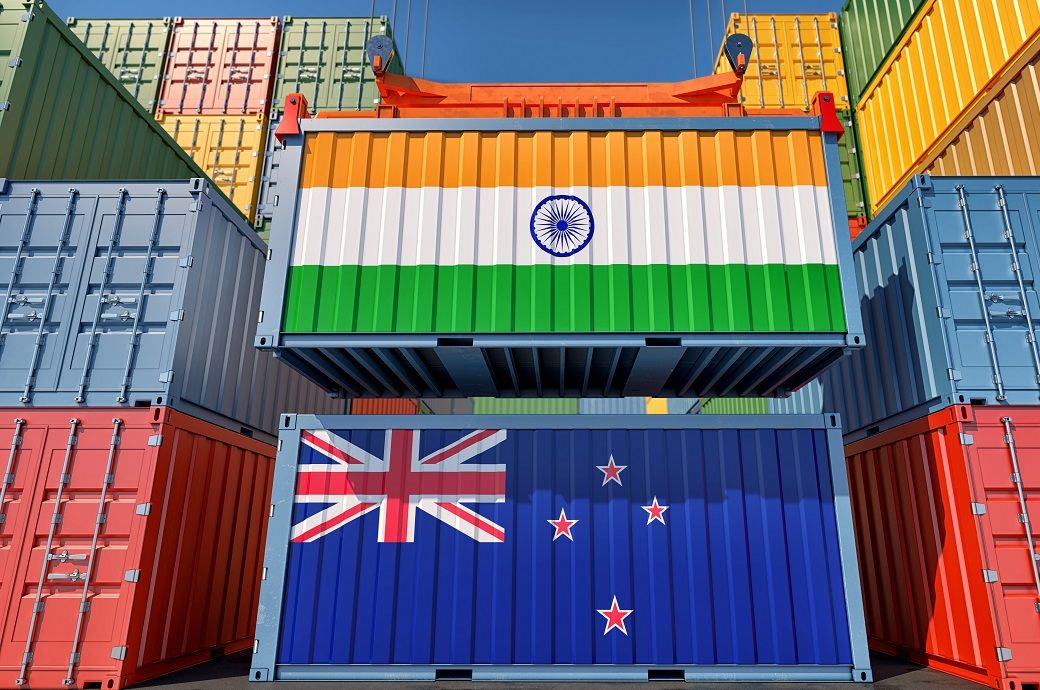
India and New Zealand have finalised a Free Trade Agreement (FTA) aimed at substantially increasing bilateral trade, with the goal of doubling it over the next five years. The agreement provides for the removal or reduction of tariffs on approximately 95 per cent of New Zealand’s exports to India, while granting Indian products duty-free access to New Zealand. New Zealand has committed $20 billion in long-term investments in India. The FTA is expected to be formally signed and implemented in 2026 after completing the required legal procedures.
India and New Zealand FTA, set for 2026, aims to double trade in five years, cutting tariffs on ~95 per cent of New Zealand exports and giving Indian goods duty-free access.
For Indian chemicals, it boosts export competitiveness, market diversification, investment, and regulatory alignment, with opportunities in specialty, fine, and pharma chemicals.
Implications for the Indian Chemical Sector
1. Increased Export Opportunities
- The removal or reduction of tariffs will make Indian chemical products more competitive in the New Zealand market by lowering export costs and improving pricing.
- Various chemical categories—including organic chemicals, specialty chemicals, petrochemicals, and pharmaceutical intermediates—are highly sensitive to tariffs. The FTA can therefore help Indian manufacturers expand their market share.
2. Access to New Markets & Diversification
- India’s chemical exports have traditionally been concentrated in markets like the US, EU, and ASEAN countries. New Zealand offers a smaller but strategically important market, particularly for niche segments such as specialty and fine chemicals.
- The FTA also facilitates collaboration in areas like R&D and regulatory alignment, enabling Indian exporters to meet New Zealand and EU standards more effectively.
- Entering the New Zealand market helps diversify India’s export base, which is crucial in the context of rising global trade tensions and tariffs in other regions.
3. Investment and Collaboration Opportunities
- By promoting investment flows and regulatory cooperation, the FTA opens avenues for joint ventures, contract manufacturing, technology transfer, and integrated supply chains in the chemical sector.
- The $20 billion investment commitment may indirectly strengthen infrastructure, logistics, and manufacturing capacity, benefiting chemical exporters.
4. Competition from Imports
- While reduced tariffs could increase competition from New Zealand imports, the impact on Indian chemical companies is likely to be limited, as India’s exports to New Zealand significantly outweigh imports.
5. Regulatory and Non-Tariff Benefits
- The agreement encourages harmonised standards and simplified customs procedures, helping exporters reduce compliance delays and associated costs.
Recommended Strategy for Indian Chemical Companies
Short-Term (0–2 years)
- Focus on chemical product lines with significant tariff reductions.
- Utilise export incentives and free trade logistics programs.
- Build partnerships with New Zealand distributors and buyers to enhance market presence.
Medium-Term (3–5 years)
- Ensure compliance with New Zealand and EU regulatory standards, including environmental and REACH-like norms.
- Explore joint ventures and R&D collaborations with New Zealand firms.
Long-Term (5+ years)
- Aim to establish India as a regional hub for specialty and fine chemicals targeting Pacific markets.
ALCHEMPro News Desk (VK)


 marketing@alchempro.com