However, Fitch does not expect the measure to affect ratings. It mainly helps rebalance current supply and demand, but new capacity additions and a higher ethanol output in sugarcane mills’ production could still lead to medium-term oversupply risks.
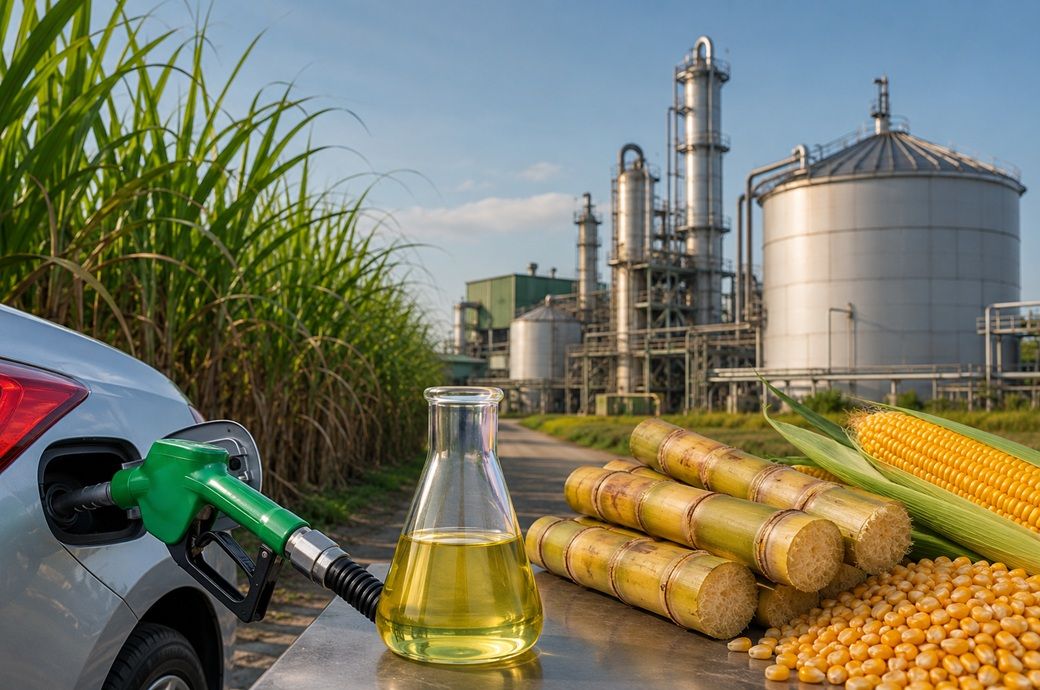
A robust pipeline of greenfield and brownfield projects, led by corn ethanol, should add over 10.5 billion litres of ethanol capacity to the local market by 2034, according to Brazil’s Ministry of Mines and Energy. Total ethanol output would rise by approximately 30 per cent to 48 billion litres in 2034 from 37.5 billion litres in 2025, Fitch said in it its Non-Rating Action Commentary.
Fitch estimated corn ethanol’s share of total production will likely reach 44 per cent, up from 27 per cent currently and less than 5 per cent in 2020.
The main challenges to adding this much corn ethanol capacity are the substantial capital requirements, which is estimates at about BRL37 billion. Another challenge is the risk that a wave of new projects could raise biomass costs and corn input costs while pressuring ethanol and dried distillers grains (DDG) prices. This could weaken project returns and cash flow generation, particularly given DDG’s important contribution to overall profitability.
Potential new demand from a 35 per cent ethanol blend in gasoline, along with sustainable aviation fuel (SAF) and marine fuel applications, could help balance the market over time. Still, Fitch does not expect those applications to have a material impact in the short term. As a result, the 32 per cent blend should help sustain producer margins in the near term, but it is unlikely on its own to rebalance the market over the medium term.
Anhydrous ethanol prices remained resilient in 2025 and 2026, averaging BRL3.2/litre versus BRL2.7/litre in 2023 and 2024, and prices remain closely linked to gasoline prices. Consumers typically favour ethanol only when it is priced at 70 per cent or less of the gasoline price. This leaves the market exposed to continued volatility. Weather conditions, supply chain disruptions, and rising diesel and fertiliser prices pose downside risks to profitability in 2027.
In the sugar and ethanol sector, Fitch currently rates Açucareira Quata SA (Zilor; National Scale Rating A+(bra)/Stable), FS Industria de Biocombustíveis Ltda (Issuer Default Rating (IDR) BB-/Stable; National Scale Rating AA-(bra)/Stable), Guatemala-based Ingenio Magdalena (IDR BB-/Negative), and Raizen SA (IDR C; National Scale Rating C(bra)/Stable).
ALCHEMPro News Desk (JP)
Receive daily prices and market insights straight to your inbox. Subscribe to AlchemPro Weekly!
 marketing@alchempro.com