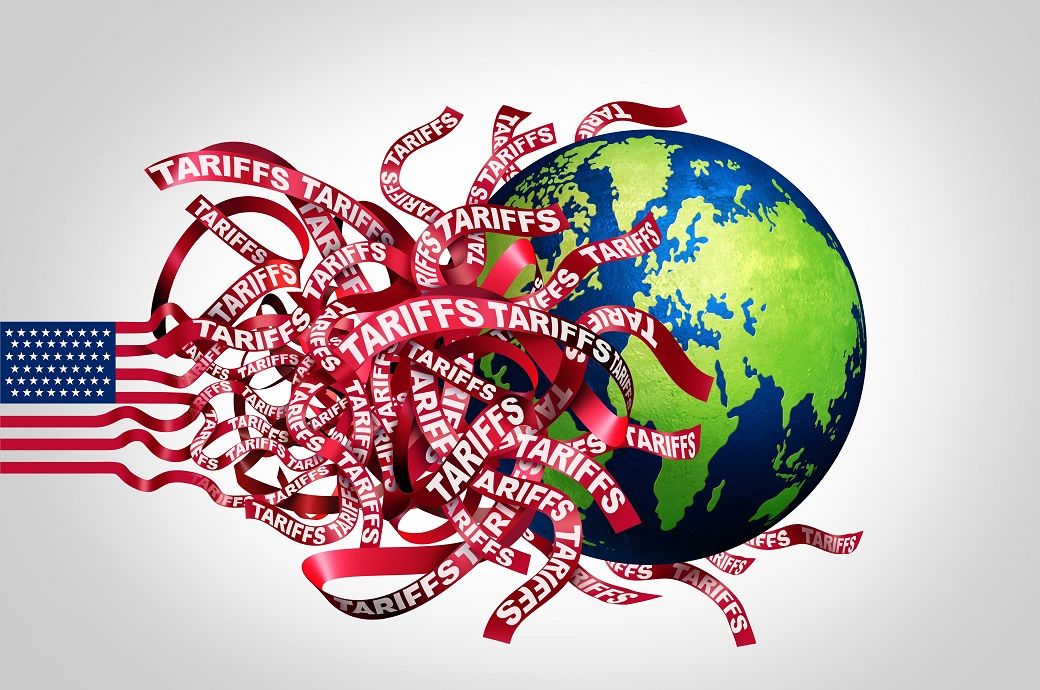
Global businesses are increasingly settling into a phase of ‘constant adaptation’ as they navigate shifting trade rules and tariff pressures, according to findings from HSBC’s latest Global Trade Pulse Survey.
The second edition of the survey captured the views of 6,750 decision-makers across 17 markets.
Over eight in ten companies are actively diversifying supply chains to mitigate trade uncertainty, while 67 per cent now feel more certain about how trade policies will impact operations compared with six months earlier.
After a difficult start to 2025, firms are regaining momentum, supported by growing clarity on regulatory requirements. Half of all surveyed companies plan to enter new geographic markets.
This improved sense of certainty has eased revenue anxieties. Globally, only 22 per cent are worried that supply chain disruption could erode revenues by more than 25 per cent over the next two years, sharply down from 37 per cent six months ago. At the same time, 53 per cent of firms expect revenue growth within the next six months, rising to 58 per cent over a two-year outlook.
“Despite global negotiations and shifting tariffs, businesses appear to be settling into a steady state of constant adaptation. Improved clarity over trade and tariffs has emboldened businesses to plan ahead, with many seeing international trade not as a risk, but as an opportunity to reinvent,” said Vivek Ramachandran, head of global trade solutions.
However, cost pressures remain unavoidable. Sixty-six per cent anticipate further cost increases over the next six months, with tariffs, customs duties, and rising freight charges listed among the biggest drivers. More than three-quarters of firms are responding through multiple strategies, including passing higher costs to customers, renegotiating supplier contracts, and investing in automation and AI.
Preparedness for regulatory changes has emerged as a decisive advantage. Companies in the US rank as the most confident in navigating trade policy shifts, with 52 per cent feeling well informed, compared with 35 per cent in Europe and 32 per cent in East and North Asia.
Alongside supply chain diversification, businesses are opening new trade corridors to strengthen resilience. Europe leads as the top target for expansion at 40 per cent, followed by Southeast Asia at 36 per cent, and both North America and East and North Asia at 32 per cent each.
Strategic shifts continue to reshape operations globally. About 47 per cent of respondents are rebalancing products and service offerings, 43 per cent are exploring mergers or acquisitions, and three-quarters have already changed or are reassessing where key assembly and processing take place, as per the survey.
“While cost and revenue pressures persist, companies are increasingly forward-looking, realigning supply chains, seeking new markets, and building the financial resilience needed to thrive amidst unpredictability,” Ramachandran added.
ALCHEMPro News Desk (HU)
Receive daily prices and market insights straight to your inbox. Subscribe to AlchemPro Weekly!
 marketing@alchempro.com