US-Cambodia Trade
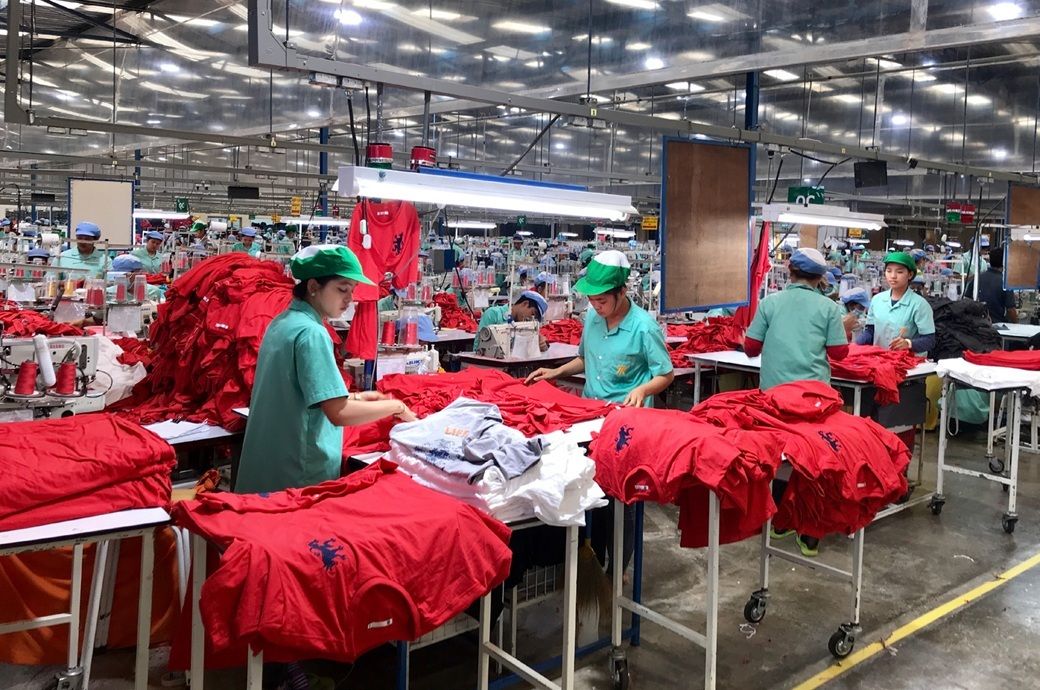
Cambodia exported around $10 billion worth of goods to the US in 2024, having a trade surplus that put it in the crosshairs of Trump’s revived tariff campaign. Exports to the US accounts for 37.8 per cent of the nation’s total exports. More than half of the US imports from Cambodia are garments, footwear and travel goods (GFT), comprising 45 per cent of Cambodia’s export revenue. In 2024, Cambodian textile and apparel exports to the US alone generated close to $5 billion, making up 40 per cent of country’s total exports to the US.
Cambodia’s economy is projected to reach $49.8 billion in 2025 (IMF), driven by manufacturing of goods for brands that include Adidas, H&M, Ralph Lauren and Lacoste.
Initial Repercussions
According to a survey of 203 out of 756 factories registered with Better Factories Cambodia (BFC), conducted by BFC in collaboration with the International Labour Organisation (ILO) and International Finance Corporation (IFC), half of the country’s GFT exports were directly affected by the initially announced high tariffs. Notably, 15 per cent of garment factories faced operational uncertainty or the risk of closure, with confirmed orders only for the next few weeks of July. Fifty-five per cent of factories confirmed orders for up to six months, and 30 per cent secured orders beyond that period. However, 15 per cent reported having no confirmed orders at all. Forty-four per cent participating factories admitted to remain operational for at least three months depending on availability of raw material and order status. Buyer confidence went down with many avoiding placing orders for the latter part of the year, those who placed orders had compelling demand: 27 per cent factories confirmed that their buyers demanded lower prices for 2025 orders, while 26 per cent reported securing new buyers to mitigate the order gaps. Many buyers even tried to pass on additional tariff-related costs to suppliers. This made factories actively work to diversify their customer base beyond the US, invest in automation, expand recruitment and enhance worker training.
Women at Receiving End
In Cambodia, women make up more than 75 per cent of the garment sector’s workforce. Looming layoffs, caused by high tariffs, within the garment industry could have an outsized effect on women workers, crippling entire families. More than half of Cambodian households are in debt to formal lenders, making it one of the most credit-penetrated countries in the region. Women who took bank loans to support their families and work in the garment industry to pay off their debts, feared job loss, which also meant losing everything. Factories shutting down impacting Cambodia’s economy, children dropping out from schools and aging population finding themselves unable to afford medicines were other onslaughts the high tariffs threatened to unleash. Foreseeing implications of high tariffs, Cambodia not only continued negotiations to get the tariffs down but also finding other ways to export more products, generate more income and create more work.
Vulnerable Job Market
Initial tariffs disrupted labour market too. Factory workers in Cambodia, already stretched by long hours, minimal protections and stagnant pay, were left with limited choices: shorter contracts with fewer protections or face job losses or resign to look for work overseas. Full-time workers faced either slashed benefits or a move to temporary status. Even the temporary factory workers, employed on a quarterly or daily basis, were rendered clueless with factories unsure of their own future. Since brands usually place orders six months to a year in advance, the tariff impact on production was expected to be immediate. Some factory workers were reported of contemplating even illegal work in Thailand if their factories close.
Job loss is a natural outcome of high tariffs which force buyers to move to countries under lower tariff rates or shut down altogether. With immediate neighbour nation having a significantly lower tariff, many companies could choose to leave Cambodia, eroding the confidence of buyers as well as investors. As production costs would rise and profit margins would shrink due to higher tariff, many garment factories would be forced to scale back operations or shut down entirely. Factories supplying American brands stood most vulnerable, with very little room to absorb the 36 per cent added costs. As estimated up to 150,000 jobs in GFT goods sector were at stake.
Subcontractor factories, with no formal registration of labour to avoid paying worker benefits, operate on fewer overheads and are able to hire labour relatively easily than many larger ones who cut hours at the time of crisis. If onslaught of tariffs continued for whatever reason, it could reverse-shift the jobs from formal to informal sector with many opting for unregistered jobs.
Cross-border Migration
When Cambodian migrant workers, who had fled Thailand since border tension began, tried returning to the tariff-impacted Cambodian job market, they too struggled in finding work. About 50,000 Cambodians were reported to have returned after the first border clash in May. Cambodia’s labour market already faces challenges. More than 14 per cent of workers earn less than $2.15 a day and 53 per cent work in insecure jobs. Considering these figures and the scale of household debt, it became difficult for Cambodia to absorb all the returning migrant workers, or even half of the 1.2 million in Thailand. This made Cambodian Prime Minister urge banks and microfinance institutions to ease loan repayments for returning migrants. His appeal highlighted the wider problem of predatory lending in the country, which often traps vulnerable workers in cycles of debt.
China Factor
Competing Vietnam’s and Indonesia’s extra advantage lies in their homegrown mills that reduce reliance on Chinese fabrics, something Cambodia lacks. US officials accused Chinese companies, which are reported to own as much as 90 per cent of Cambodia’s garment factories, of using the country as a trans-shipment hub to sidestep existing tariffs. Since Cambodia heavily relies on Chinese suppliers, US continuing with high tariffs announced between April and July could have resulted in a 20 per cent drop in exports by 2026.
New Development
As a surprise turn of events, on October 27, under a new trade agreement announced during the ASEAN Summit in Kuala Lumpur, Cambodia committed to eliminate tariffs on 100 per cent of US industrial goods and US food and agricultural products exported to Cambodia. However, the US will keep a 19 per cent reciprocal tariff on Cambodian-origin goods, except for the specific products, which do NOT include apparel.
ALCHEMPro News Desk (SB)
Receive daily prices and market insights straight to your inbox. Subscribe to AlchemPro Weekly!
 marketing@alchempro.com