Often celebrated as the birthplace of the nation’s modern garment business, the city traces its legacy back to 1977, when Desh Garments—widely regarded as Bangladesh’s first garment factory—was reportedly established there. That moment, modest as it may have seemed then, set in motion the spectacular ascent of the readymade garment (RMG) industry, which today stands as the world’s second-largest exporter after China.
Over the decades, Chittagong has evolved into a dense cluster of factories, workshops and export facilities that shape not only the local economy but also Bangladesh’s broader industrial identity. The city’s manufacturing landscape churns out everything from mass-market apparel to diversified product lines for demanding international buyers, feeding a sector that contributes more than 80 per cent of Bangladesh’s total export earnings.
It is a feat few other cities in the region can claim, and it has firmly positioned Chittagong as a nerve centre of global sourcing.
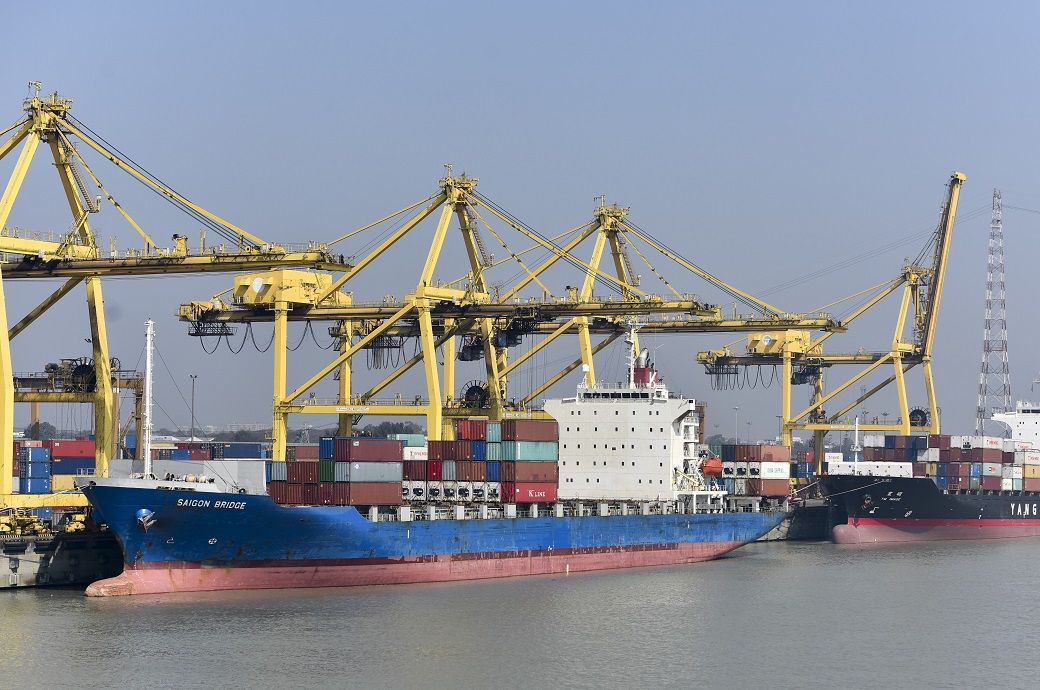
The city’s strategic might goes beyond just factory floors. The Chittagong Port—Bangladesh’s primary maritime gateway—handles a relentless flow of containers, moving thousands of shipments of finished garments each day to Europe, the United States, and various other international markets.
Its location makes it indispensable to Bangladesh’s logistics backbone, accelerating the movement of goods and anchoring the country’s position in the global apparel supply chain. Unsurprisingly, the port’s efficiency and geographic advantage have drawn numerous international buyers to set up their presence in the region, allowing them to source products straight from local manufacturers.
This proximity has strengthened relationships, reduced turnaround times, and cemented Chittagong’s stature as a destination where global demand meets agile production capacity.
However, if recent media reports hold true, Chittagong has witnessed a spate of factory closures over the past year, triggering unease among manufacturers, workers, and stakeholders.
According to a list compiled by the Chattogram Industrial Police, as cited by the reports, around 22 factories across the city and the Chattogram EPZ have reportedly ceased operations in just twelve months, with eleven reportedly shutting down this year alone.
This reportedly impacted adversely around 5,000 workers, even as one concerned Industrial Police official reportedly noted, the closures stemmed from “financial distress, complications over letters of credit (LC) and a sharp fall in export orders.”
Industry insiders have suggested that the real damage might be far deeper, as many small subcontracting units—dependent entirely on orders from larger factories—have quietly folded, their struggles going unrecorded in official statistics.
Among the high-profile casualties is also the factory of the renowned Nassa Group. Once a prominent manufacturing force, financial losses, LC troubles, and waning order volumes were cited as the key reasons behind the shutdown.
Industry players have pointed to the added pressure of US tariffs, claiming that factories in Chittagong—being heavier suppliers to the American market—have been hit particularly hard.
“With the new US tariff, there is no profit margin left. While the large compliant factories may still survive, things are particularly challenging for the smaller ones,” an industry player lamented.
Others have suggested that the shifting domestic political dynamics could be another contributing factor to the disruptions experienced by certain factories.
As Bangladesh’s crown jewel of apparel manufacturing grapples with these headwinds, the stakes are undeniably high. What is clear, however, is that Chittagong’s trajectory will continue to shape the fortunes of the national RMG industry, just as it has since that fateful beginning in 1977.
ALCHEMPro News Desk (DR)
Receive daily prices and market insights straight to your inbox. Subscribe to AlchemPro Weekly!
 marketing@alchempro.com