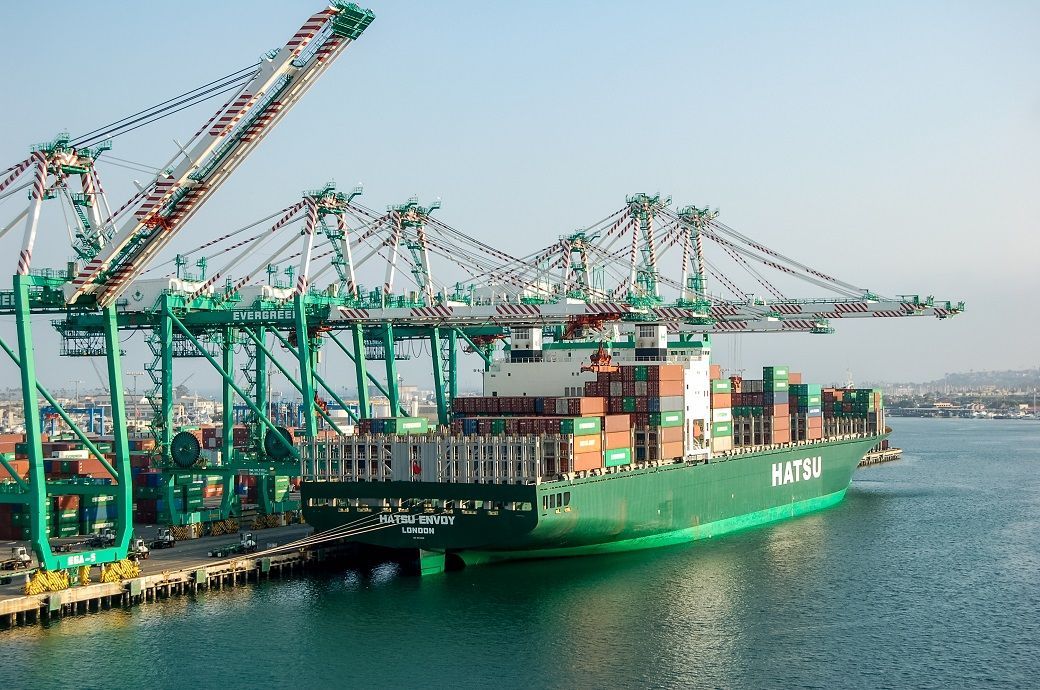
This doesn’t come as a surprise, rather an anticipated downturn in demand due to the ongoing tariff war. Overall, the busy summer was a rollercoaster of pulling-forward inbound goods, as shippers scrambled to front-load during the brief pause on reciprocal tariffs, only for the brakes to slam this September, Ti Insight said in an article on its website.
The whiplash was particularly severe at the Port of LA, where after a record breaking July of 1.02 million TEU, the highest monthly volume in port history, volumes crashed 7.5 per cent year on year (y-o-y) in September. Imports fell 7.6 per cent, while exports remained flat. New tariffs have curbed imports without yet giving exports a meaningful lift.
Long Beach posted a 6.8 per cent volume increase in volumes y-o-y through the first nine months of 2025, with Q3 marking its second highest quarter ever. Port officials attributed activity to early Peak Season demand and ongoing deliveries from orders placed during the recent tariff pause.
Despite the September dip, LA’s Q3 still notched 2.9 million TEU, a quarterly record, with July-August’s near-2 million TEUs, posting “the best two-month stretch for any port in the Western Hemisphere,” said ports executive director Gene Seroka.
New York/New Jersey held its position as America’s second-busiest port, though September volumes fell 5 per cent. Year-to-date figures told a different story: up 3.1 per cent, fuelled by shippers front-loading holiday cargo earlier in 2025 ahead of tariff deadlines.
North American ports saw a 9 per cent quarter on quarter (q-o-q) throughput increase at major US ports. And although several ports recorded declines, POLA and POLB alone account for around 40 per cent of traffic, Ti added.
The Ports of Los Angeles and Long Beach handled the most cargo in H1 2025, accounting for 38.7 per cent of total TEUs. However, this share has fallen from 39.6 per cent in 2024, partly due to reduced Chinese imports. Meanwhile, the Ports of New York/New Jersey, Savannah and Houston gained market share, thanks to their more diverse base of trade partner countries. By coast, the East and Gulf coasts handled 51.7 per cent of TEU volumes in 2025, up from 50.4 per cent in 2024, as the decline in Chinese imports has largely affected Southern California ports. The trajectory is clear: the centre of gravity is shifting eastward.
As Chinese imports decline, West Coast ports that built their empires on Trans-Pacific trade are vulnerable. East Coast gateways with stronger ties to Southeast Asia, Europe, and Latin America are picking up the pieces.
Overall, import patterns are changing as a result of the tariffs, although the full extent of that remains to be seen. In June, following the announcement of a 90-day pause on tariffs, imports from China rose slightly (0.4 per cent), while imports from other countries climbed: Indonesia (+17 per cent), Thailand (+8.6 per cent) and Vietnam (+7.7 per cent) as shippers shifted sourcing to Southeast Asia.
With peak season cargo already delivered, Q4 looks soft. From November 10, China will suspend its additional 24 per cent tariffs on certain US goods (maintaining a 10 per cent duty). But uncertainty lingers. Potential tariff escalation could accelerate the decline.
Inflationary pressures and economic volatility threaten to dampen consumer spending heading into year-end, and port officials are bracing for a quieter close to 2025 than the record-breaking summer suggested.
ALCHEMPro News Desk (RR)
Receive daily prices and market insights straight to your inbox. Subscribe to AlchemPro Weekly!
 marketing@alchempro.com