A major catalyst in this diversification is the India-UK FTA signed in July 2025, which grants duty-free access to 99 per cent of India’s textile and apparel exports. This preferential access is expected to lift India’s textile exports to the UK by 30-45 per cent by 2030, and could help the country double its home textiles market share in the UK within three years.
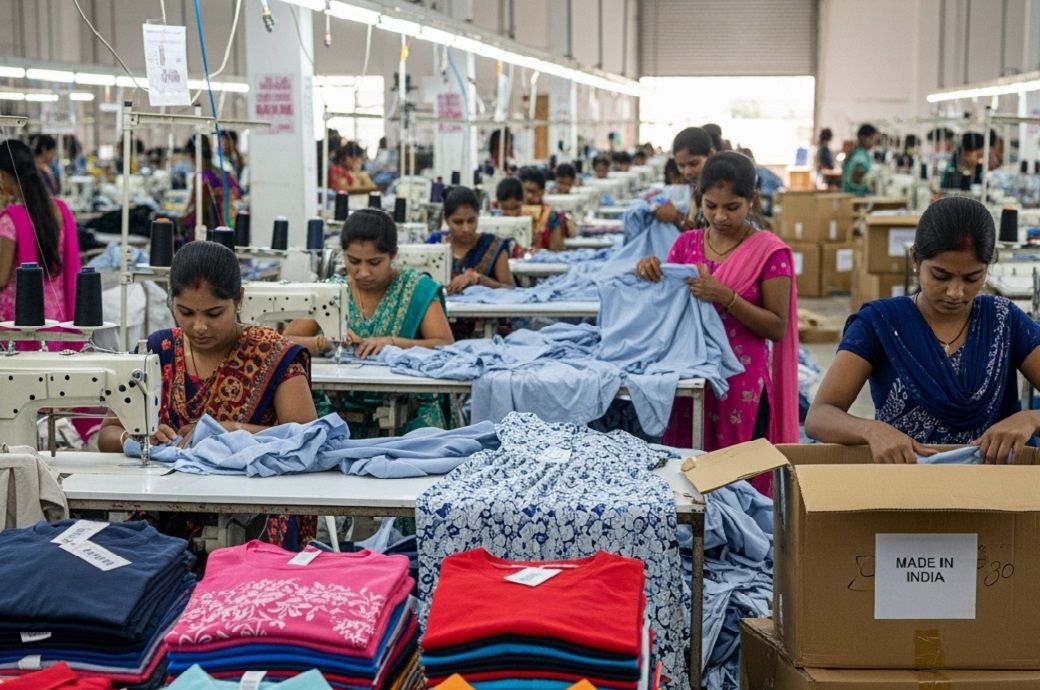
India’s textile sector is entering a new phase of expansion, but against one of its most turbulent global backdrops in years. The United States steep tariffs of up to 50 per cent on Indian goods have pushed the effective rates on Indian textile and apparel imports into the US to 63.9 per cent. This has driven the industry to widen its global footprint and find fresh momentum in new markets.
India’s expanding global presence is supported by steady domestic fundamentals. Valued at $174 billion in FY25, the textile and apparel sector is projected to reach $350 billion by FY31, growing at a 12.4 per cent CAGR. However, sustaining this growth will require a more stable global trade environment, particularly in India’s largest export market, the US.
Nevertheless, a significant transformation is underway within the sector through the rapid rise of technical textiles, its fastest-growing segment. The market is set to grow from $29 billion in 2024 to $123 billion by 2035, driven by applications in healthcare, mobility, defence, and infrastructure. Technical textile exports reached $2.9 billion in FY25, expanding at an 8 per cent CAGR, with Packtech and Indutech together accounting for nearly two-thirds of export volumes.
Meanwhile, India’s domestic fashion consumption landscape is also evolving rapidly. Online apparel sales are projected to grow 17 per cent in FY25 and maintain a 15 per cent CAGR till FY30, with quick commerce entering the fashion category as well. India remains an attractive market for global retailers: 27 international brands entered the country in 2024, twice the number in the previous year, the report stated.
The number of DPIIT-recognised textile startups grew 3.7x between 2020 and 2024, while apparel-brand startups raised $120 million in 2025 (till October), a 2.6 per cent increase year-on-year.
With the industry being the second-largest employer in the country, the government is determined to mitigate the impact of global volatility through several supportive measures in the second half of 2025. These include the revocation of QCOs on key polyester raw materials, which had inflated costs by nearly 30 per cent, a ₹450 billion export support package, and the extension of duty-free cotton imports through December 31, 2025. These interventions come at a time when domestic cotton production has declined sharply, from 386 lakh bales in 2014–15 to 294.25 lakh bales in 2024–25, with imports nearly doubling over the same period. Clarity on BIS contamination standards remains pending and continues to concern exporters.
“India’s textile sector is navigating one of its most complex periods in years,” said Mohan Ramaswamy, co-founder and CEO, Rubix Data Sciences. “Tariffs, shifting global demand, sustainability pressures, and fierce competition are reshaping the landscape. But the industry is responding with agility, expanding into new markets, investing in technology, moving up the value chain, and embracing circularity. At Rubix, our mission is to equip businesses with the intelligence needed to decode this volatility, manage risk proactively, and make confident decisions in a rapidly changing global economy.”
As India advances toward becoming a more globally competitive textile hub, Rubix Data Sciences notes that sustained investment in innovation, technology adoption, raw material security, and sustainable manufacturing will be crucial. With growing export diversification, rising investor interest, and expanding digital retail channels, India’s textile industry is well positioned to drive the country’s next phase of manufacturing-led growth.
ALCHEMPro News Desk (RR)
Receive daily prices and market insights straight to your inbox. Subscribe to AlchemPro Weekly!
 marketing@alchempro.com