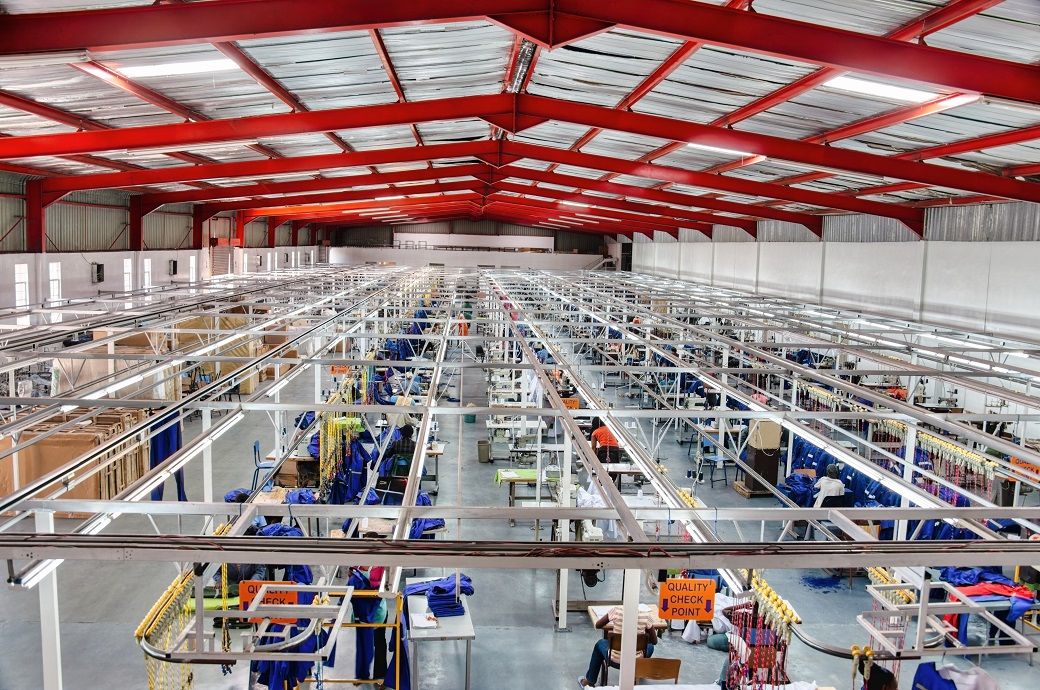
Two developments stood out: first, a recalibration of US tariff policy that affected the economics of AGOA-based exports; second, measured advances in AfCFTA’s trade infrastructure (customs systems, corridor diagnostics, payment platforms). Together, these developments forced exporters and policymakers to shift from reliance on preference to building durable, performance-based models. The success stories of 2025 were those that embraced agility, integrated strategy, and technology-enabled foresight.
AGOA in Transition: Tariff Updates, Renewal Talks, and Exporter Strategies
For decades, the African Growth and Opportunity Act (AGOA) has anchored many of Africa’s apparel exporters to US markets. In 2025, that anchor shifted in both symbolic and economic terms.
1. US Tariff Shifts and Policy Uncertainty
The US introduced a series of tariff adjustments and regulatory clarifications in 2025, narrowing duty advantages on certain apparel lines when origin or processing criteria became stricter. Simultaneously, Congress contemplated AGOA’s future, debating a short extension with modernisation provisions. For exporters, this created a dual pressure of protecting current volumes while preparing for possible disruption.
In many cases, orders were frontloaded in early 2025, and buyers placed firms on conditional contracts tied to stricter compliance or fallback sourcing contingencies. Smaller suppliers with limited capacity to reconfigure quickly, faced cancellations or margin squeezes.
2. Exporter Adaptations
Importantly, trade associations and government agencies in AGOA-eligible countries began advocating for modernisation clauses tied to digital trade support, technical assistance for origin audits, and lender risk guarantees to reduce volatility for factory operators.
AfCFTA: Turning Market Promise into Operational Reality
While AGOA’s fate remained uncertain, AfCFTA’s infrastructure and tools gained incremental traction and meaningful advances across 2025.
These advances did not eliminate friction, but they transformed the possibility space. Firms could now plan regionally and scale incrementally while hedging against external preference volatility.
Sustainability and Circularity: New Export Conditions, New Opportunities
On the regulatory front, 2025 accelerated the era of sustainability as a pre-condition for market access. The EU’s escalating textile and circularity rules (including producer responsibility measures) and related standards elevated the bar for exporters; requiring traceability, reduced waste, and demonstrable environmental performance. African exporters recognised that compliance is becoming a cost of entry into premium markets and a potential source of differentiation.
This pressure catalysed two positive outcomes: investment in green industrial parks and early moves into recycling and circular supply chains. Several countries launched or expanded ‘green textile’ investment zones (notable activity in Kenya and Ethiopia), where renewable energy, wastewater treatment, and common-use recycling infrastructure reduce unit costs and help meet buyer sustainability specifications. In parallel, innovative recycling startups and public–private EPR (Extended Producer Responsibility) pilots began linking waste recovery with local feedstock for textile finishing thereby transforming waste into a tradable input rather than a disposal headache.
Foreign Investment Dynamics: China, Türkiye, and New Global Entrants in Africa’s Textile Future
By 2025, Africa’s textile and apparel industry has become a magnet for foreign investment, not just from traditional partners like the United States and the European Union, but increasingly from China, Türkiye, India, and the Middle East. These countries are betting big on Africa’s untapped potential, young workforce, and growing consumer markets.
China’s strategic pivot is especially significant. Facing rising labour costs and stricter environmental regulations at home, Chinese textile firms are offshoring production to African countries with abundant labour and access to preferential trade agreements like AGOA (which ended on September 30, 2025) and AfCFTA. Ethiopia, Kenya, and Egypt have become major beneficiaries. Industrial parks such as Hawassa Industrial Park (Ethiopia) and Mombasa’s Export Processing Zone (Kenya) now host multiple Chinese-owned factories producing apparel for Western brands.
Beyond cost advantages, China’s Belt and Road Initiative (BRI) is financing infrastructure like roads, ports, and power grids that reduce logistics bottlenecks for African textile exporters. Chinese investors are also introducing vertical integration: from cotton ginning to garment assembly, linking African raw materials to global value chains.
Türkiye is another emerging powerhouse. Turkish textile investors are leveraging cultural and geographical proximity to North Africa. In Egypt, Morocco, and Tunisia, Turkish manufacturers have established joint ventures in spinning, weaving, and denim production to cater to both European and Middle Eastern markets. Türkiye’s expertise in technical textiles and fast fashion has also influenced African production models, emphasising agility and design innovation.
Indian, the UAE, and Saudi investors are joining the mix, financing textile industrial zones in Benin Republic, Nigeria, and Ghana. Their motivation: diversify supply chains away from Asia’s congestion and tap into AfCFTA’s 1.5-billion-person market. Together, these investments are gradually turning Africa into a strategic textile production corridor linking Asia, Europe, and the Middle East—a trend likely to define the next decade of global sourcing.
Egypt’s Giant Strides: Building a Competitive, Integrated Textile Ecosystem
Among African textile powerhouses, Egypt stands out in 2025 as a model for industrial integration, innovation, and export readiness. Once known primarily for its world-class long-staple cotton, Egypt has transformed its textile landscape through massive state-backed modernisation projects and foreign investment partnerships.
The cornerstone of this transformation is the Mahalla El-Kubra Textile City, one of the Middle East and Africa’s largest integrated textile complexes. The government’s ambitious ‘Egypt Vision 2030’ prioritises textiles as a strategic export sector, with over $1 billion invested in upgrading spinning, weaving, dyeing, and garment production facilities. The goal is to increase textile exports from roughly $3.3 billion in 2023 to $10 billion by 2028.
Foreign partnerships are playing a key role. Chinese, Turkish, and Italian companies have jointly invested in Egyptian industrial zones such as 10th of Ramadan, Borg El Arab, and the Suez Canal Economic Zone, establishing vertically integrated manufacturing chains from raw cotton to finished garments. Egypt’s geographic proximity to Europe, preferential trade access under EU-Egypt Association Agreement and COMESA, and skilled workforce make it a natural hub for near-shore production.
Egypt is also positioning itself at the forefront of sustainable textile innovation. New dyeing facilities in Alexandria employ zero-liquid-discharge systems, while cotton processors are adopting Better Cotton Initiative (BCI) protocols. Moreover, Egypt’s partnership with OECD and UNIDO supports low-carbon transition programmes, aligning local production with European Green Deal requirements.
Through a mix of industrial modernisation, strategic partnerships, and environmental compliance, the country is redefining what ‘Made in Africa’ means on the global stage.
Structural Gaps: What Still Holds the Sector Back
Even as pockets of progress emerged, several persistent structural constraints continued to undermine potential scale and consistent competitiveness. These gaps are the friction points exporters encounter every time growth is pursued.
1. Logistics and Trade Friction: High inland transport costs, inconsistent corridor performance, and port congestion continue to erode margins. The disparity in border performance, where one crossing clears in 24 hours and the next adjacent one takes days, creates routing risk and inefficiency.
2. Energy Reliability and Cost: Every step in textile processing, spinning, weaving, and dyeing is energy-intensive. Unpredictable power outages force reliance on diesel generators or expensive backup systems, making investments in high-efficiency or green technology harder to justify.
3. Finance Gaps for Modernisation: Short-term working capital is available, but long-term capital to invest in plant upgrades, sustainable machinery, or recycling systems is rare. SMEs often lack credit histories, acceptable collateral, or digital footprints necessary for conventional lenders.
4. Skills, Compliance, and Quality Systems: Passing international buyer audits requires capable management, quality assurance systems, and compliance tracking. Many factories lack the skilled capacity or standardised systems to do so reliably.
5. Sector Fragmentation: Many national textile ecosystems remain siloed across subsectors; raw materials, processing, and apparel are regulated separately, limiting aggregated scale, shared infrastructure, and integrated investment incentives.
6. Data Poverty and Weak Interoperable Systems: Data on customs, trade flows, and industrial statistics remain fragmented, old, or inconsistent across borders. This undermines both planning and investor confidence.
Remedies and Levers
Governments and RECs should:
How Firms Adapted in 2025: Strategies That Worked
Despite structural headwinds, a cohort of firms bridged the divide by employing deliberate strategies. These adaptive approaches helped them maintain continuity and compete even as global conditions shifted.
1. Market Diversification: Rather than wholly abandoning their US routes, many firms diversified into African and European markets. This dual-market strategy softened shocks from any one demand channel.
2. Traceability and Compliance as Investment: Even small investments in digital tagging, audit documents, and traceability enabled faster buyer approvals and reduced contract cancellation risk.
3. Buyer Partnerships and Shared Upgrades: In some cases, brands co-invested in factory upgrades (equipment, auditing support) in exchange for contract commitments. These hybrid models spread risk and aligned incentives.
4. Operational Resiliency: Successful firms built buffers like capacity modular lines, common tooling, and buffer input stocks, letting them adjust production without complete shutdown under supply strain.
5. Leveraging AfCFTA Tools: Firms more fully integrated into AfCFTA payment systems and corridor tools reduced forex bottlenecks and gained smoother cross-border execution.
6. Skills and Management Upgrades: Resilient firms invested in upskilling line supervisors, compliance officers, and data managers, enabling smoother audits, better quality, and more consistent performance.
7. Creative Capital Structuring: Where traditional loans were not available, firms used lease-to-own equipment models, buyer-backed pre-finance, and internally blended credit lines. These mixes allowed incremental modernisation rather than wholesale overhaul.
These strategies were not equally accessible to all firms. Capacity, scale, and buyer relationships determined who could best leverage them. Yet the common denominator among winners was the strategic use of data, partnership orientation, and operational discipline.
2026 Outlook: Scenarios and Strategic Priorities
If 2025 was about adaptation, 2026 will be about institutionalising resilience. Table 1 shows three scenarios, each with triggers, consequences, and priority action paths.
Key signals to monitor: AGOA legislative timelines, PAPSS volumes, corridor dwell-time metrics, green capex approvals, share of exports meeting sustainability criteria, and number of firms with full traceability systems.
Conclusion: From Policy Windows to Competitive Wins
As 2025 draws to a close, Africa’s textile and apparel sector is at a crossroads of implication and opportunity. The year exposed the limits of dependency on preferential access and underscored the imperative for structural reform. But just as importantly, it revealed that African exporters and governments are capable of adaptation, innovation, and resilience.
Preference alone no longer defines success. What mattered in 2025 were the firms and initiatives that invested ahead in data, sustainability, and regional integration. Those that led survived volatility and have consequently laid the groundwork for continuity.
Looking into 2026 and beyond, the path forward is clear: build trade systems that reward performance and predictability, institutionalise support for green transitions, facilitate shared infrastructure and digital connectivity, and elevate Africa’s narrative both as a low-cost source and as a sustainable textile partner of choice.
Africa’s exporters are no longer waiting to be included in the global narrative; they are writing it. The question now is whether 2026 becomes the year those gains become permanent, or a moment lost in inertia. With clarity, coordination, and commitment, the continent’s textile and apparel industry can transition from dependence to sovereignty, from volatility to leadership, and from potential to pride.
ALCHEMPro News Desk (AM)
Receive daily prices and market insights straight to your inbox. Subscribe to AlchemPro Weekly!
 marketing@alchempro.com