Recently, demand for APIs has shifted from traditional, high-volume small molecules to a broader need across biologics, peptides, oligonucleotides, viral vectors, and more. API needs are becoming increasingly complex due to their high specificity and growing role in next-generation therapeutics.
Some of the next-generation APIs such as peptides and oligonucleotides are heat sensitive. Their manufacturing processes have thus relied on the costly, time-consuming, and energy-intensive freeze-drying method, which can remove solvents without heating, to obtain APIs with high quality. Although the freeze-drying process can be shortened by concentrating the raw material solution to reduce the volume of liquid feed prior to the freeze-drying step, conventional concentration technologies such as vacuum distillation carry the risk of quality degradation due to heating, and the formation of precipitates caused by changes in solvent composition during the concentration step.
Asahi Kasei’s system for forward osmosis (FO) and membrane distillation (MD) addresses such manufacturing challenges by concentrating the raw material solution for pharmaceutical applications without applying heat or pressure. FO utilizes an osmotic pressure difference across a membrane to remove water from liquids, achieving highly concentrated API solutions under very mild conditions. This is in contrast to the tangential flow filtration (TFF) that is commonly used in API manufacturing, which can be challenging at high API concentration, as fouling or leaks can affect concentration efficiency and recovery rates. MD leverages a vapor pressure difference across a membrane to remove volatile components such as acetonitrile, alcohol, or ammonia, at or below room temperature.
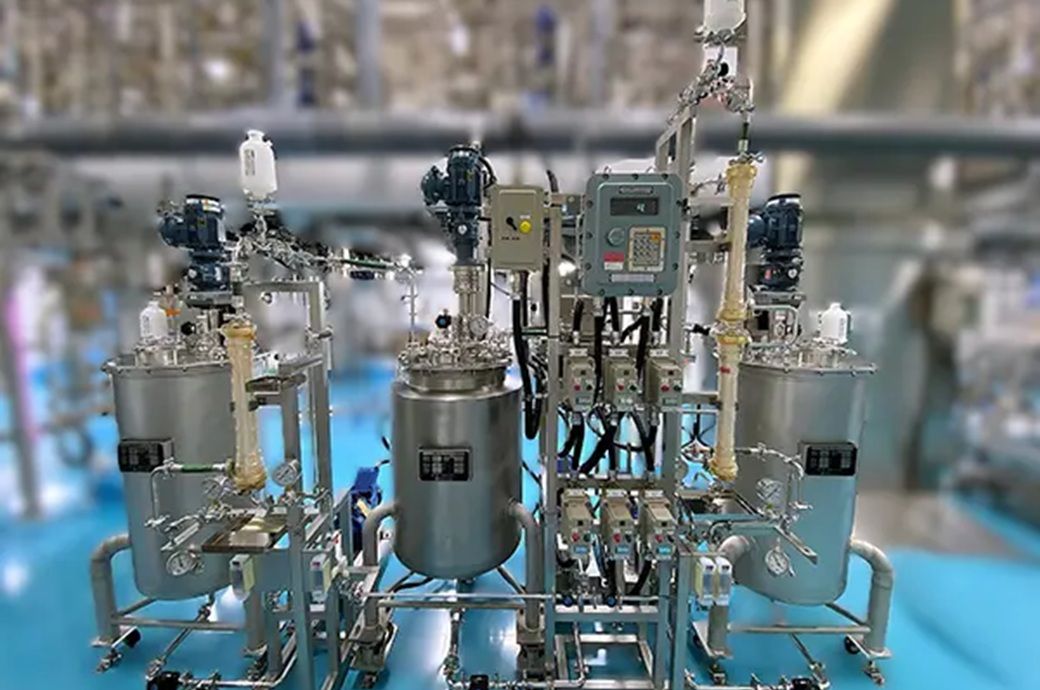
The combination of FO and MD, both of which do not rely on heating or pressurization, enables the preparation of high-concentration solutions for freeze-drying while maintaining control of ingredient composition and avoiding precipitation. This FO–MD system allows short freeze-drying time, resulting in high productivity manufacturing of APIs at high purity and high yield. The FO–MD system installed at Peptistar’s manufacturing facility is being operated at manufacturing scale as part of its evaluation toward GMP production. The system can be used with batches of up to 100 L and is designed to be compatible with GMP-compliant operation.
Asahi Kasei looks forward to studying the prospects for future commercialization of the FO–MD system. This aligns with the company’s broader structural transformation, positioning Life Science as a Growth Potential business in its medium-term management plan.
ALCHEMPro News Desk (JP)
Receive daily prices and market insights straight to your inbox. Subscribe to AlchemPro Weekly!
 marketing@alchempro.com